|


| 24 September 2013 LNHG Field Trip, Appin
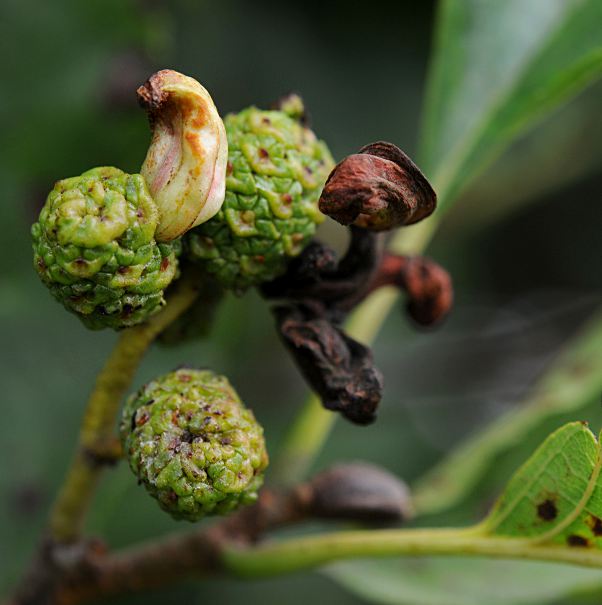
The Alder Tongue fungus, Taphrina alni, found by Rob and photographed
by Jan. The "tongues" are galls caused by the fungus.
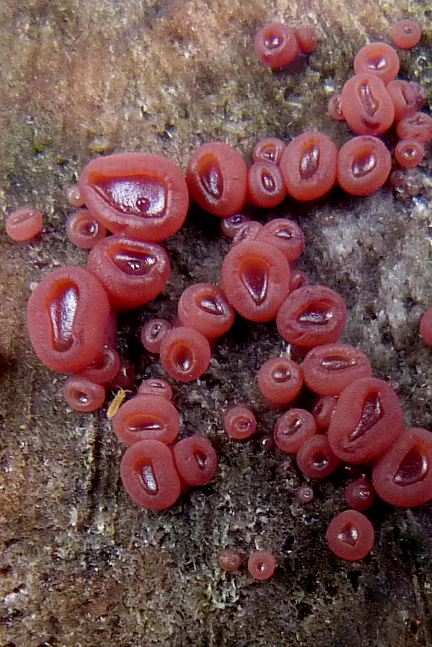
A log beside the cycle track bore the crimson cups of
Ascocoryne cylichnium on its cut surface and the yellow stems of Mycena
epipterygium on its lower side, captured in this photo by Jan.
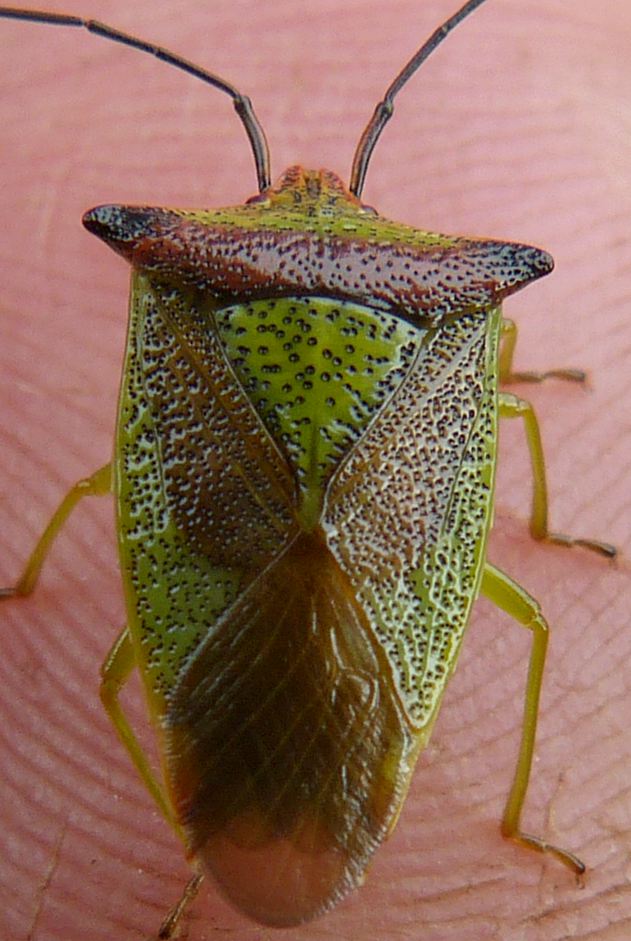
Rob found this Hawthorn Shieldbug on willow beside the cycle track...
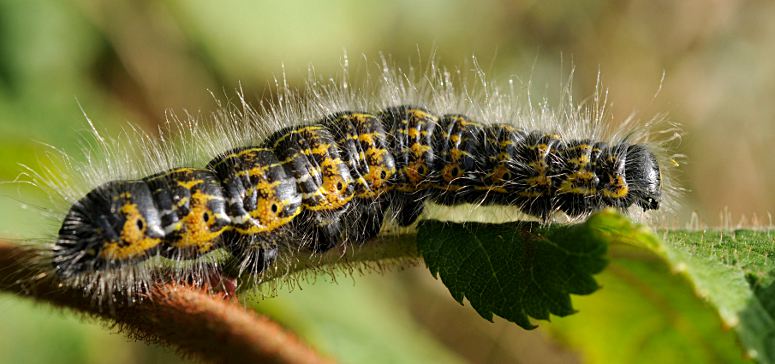
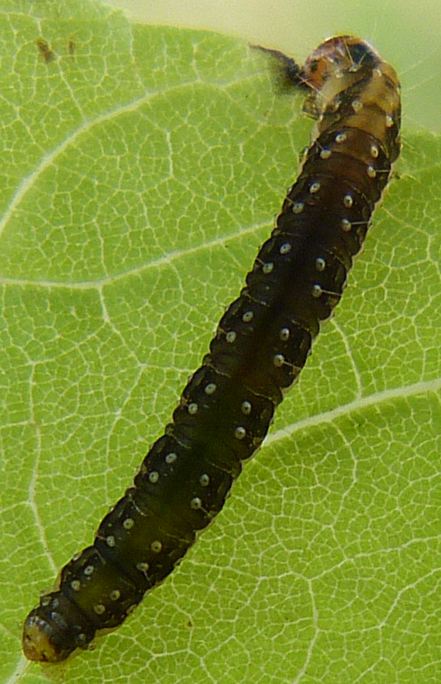
...and this Buff-tip Caterpillar on Hazel (photo by Jan) We
found several more of these on the same Hazel bush, but they were not
feeding in close groups like they do when they're younger.
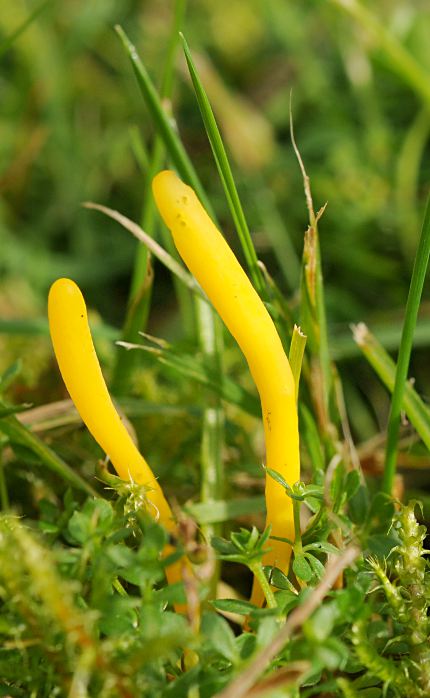
The Yellow Club, Clavulinopsis Helvola, found by Cynthia
and photographed by Jan. I didn't take many photos in the
churchyard as people were constantly finding new things for me to look
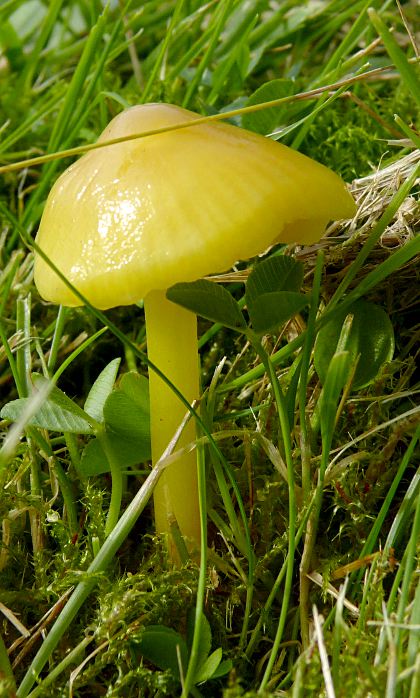
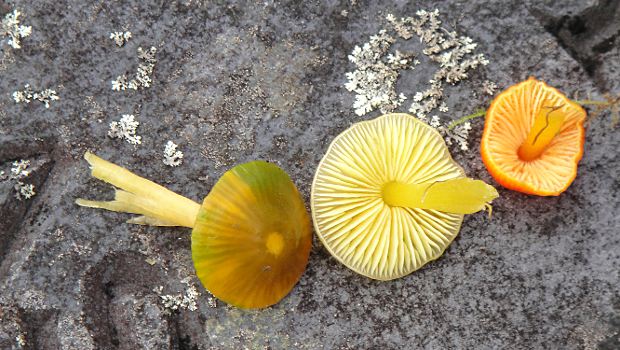
at and it was difficult to keep up! The one on the right is the
only waxcap photo I took in situ, and it's just the common old Golden
Waxcap (H chlorophana).
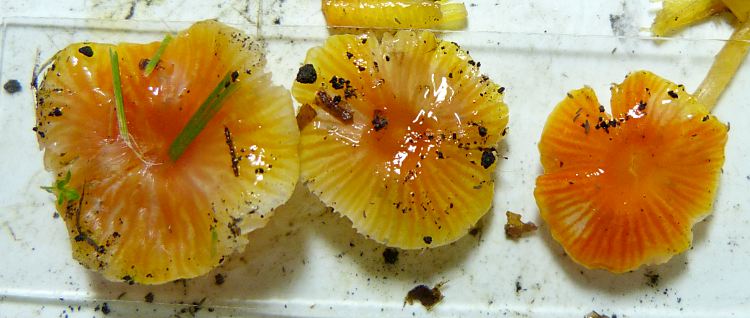
As well as the normal all-yellow form of Hygrocybe
glutinipes, which was exciting enough, we found this striking
orange-blotched variety, which had me puzzled until I got it home, hence
the caps on the slide. Sorry for all the dirt stuck to the caps,
but it's not called the Glutinous Waxcap for nothing.
A selection of waxcaps photographed by Catherine We found 9 waxcap species in the churchyard altogether. In rough order of frequency they were:
A pretty good haul when you consider that on our first two annual Waxcap Wanders we only got 9 each time during the whole outing, and thought this was impressive, as indeed it was since 9 on one visit makes a site of "Regional Importance". What makes today's total even more remarkable is that 3 very common species, Scarlet, Snowy and Heath Waxcaps, were not present. It was only the second time I'd seen H glutinipes and H
irrigata in Argyll. The previous glutinipes was in Duror Cemetery
on last year's Waxcap Wander, and the previous irrigata was on Lismore
on our Aug 2013 midweek walk.
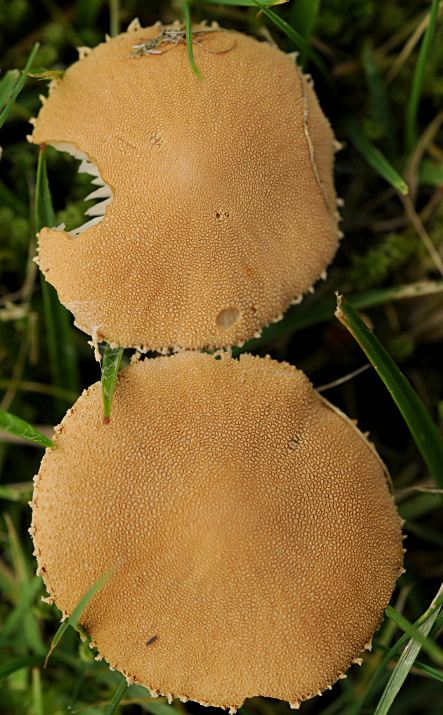
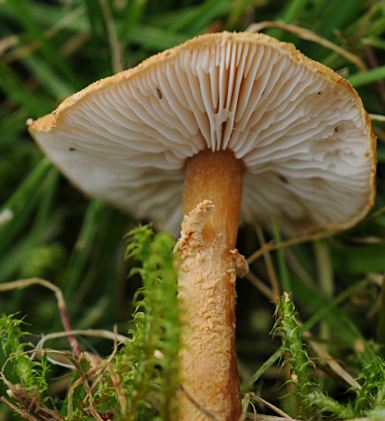
Another grassland fungus in the churchyard was the
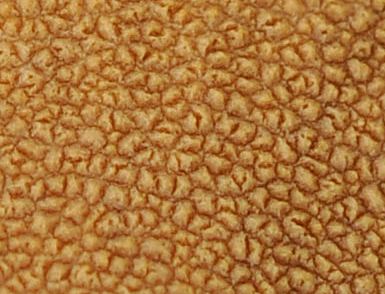
Powdery Earthcap, Cystoderma amianthinum. Jan's photos show the
granular structure of the cap surface which is very unusual among
mushrooms and takes you at once to the Cystoderma group.
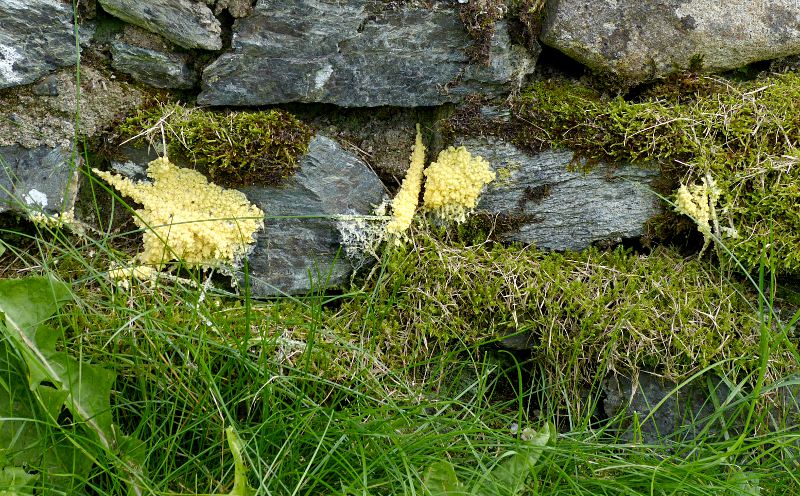
The slime mould Mucilago crustacea is common at the
moment in grassy areas that are not too acidic. Here the plasmodium
has turned yellow, a sign that it is ready to start producing spores,
and from its beginnings deep down in the grass it has climbed the cemetery wall so
that the spores will disperse further when released.
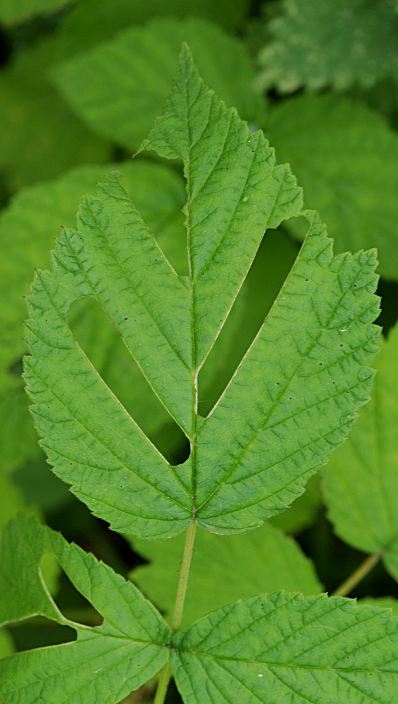
The harvestman Mitopus morio, its legs approximating to the veins on
the leaf, and a study of feeding holes in the same Bramble bush by Jan.
The harvestman is perhaps lying in wait for whatever made them.
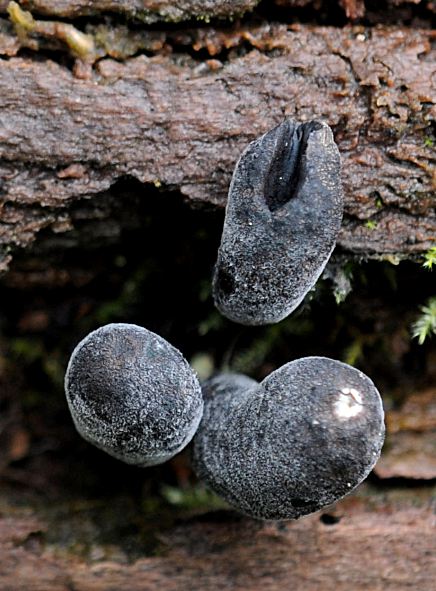
The Monarch of the Glen! - Jan's photo of Xylaria hypoxylon, the
Candlesnuff Fungus.
Here is the Caterpillar club attached to its dead caterpillar, which
I think might be that of the Emperor Moth.
A big thankyou to everyone who took part. Sorry for all the things I've left out. Will add more id's, photos and info when time allows.
|