|


| 13 December 2014 North Creagan field trip
In April I visited St Cyril's Well in the North Creagan woods with the Appin Historical Society, and noticed that while the woods were botanically poor they were rich in lichens, so it would be a good place for a winter walk. The woods have fine old trees of oak, hazel, ash,
birch and alder, and the area around the well is very humid and mossy,
ideal for the Oceanic lichen communities for which our part of the world is
renowned.
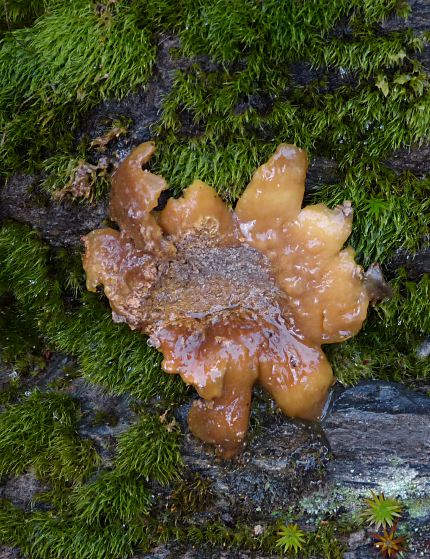
The item on the left looked potentially exciting as it
reminded us all of star-shaped fungi we'd seen in the books but never
encountered in reality. It turned out to be more mundane,
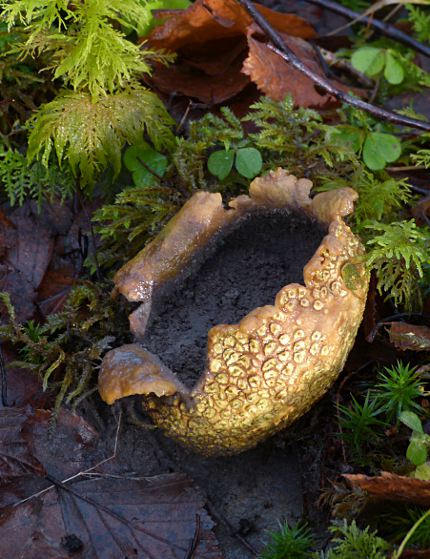
the remains of a Common Earthball. The one on the right, found
later by Cynthia, shows how the skin splits and peels back to
release the spores.
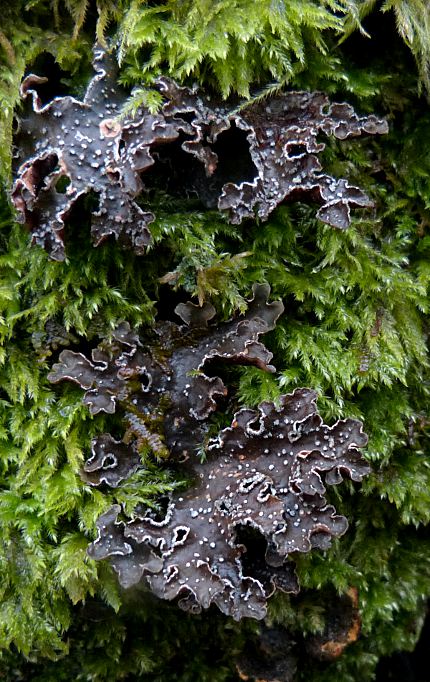
Lobaria pulmonaria or Tree Lungwort was frequent on the hazels, but the one on the left had the added interest of hosting the pinkish-brown blobs of Tremella lobariacearum. This is a fungus of the same genus as the well-known Yellow Brain Fungus (T mesenterica) and Leafy Brain Fungus (T foliacea) but, like many obscure members of the genus, it is restricted to a particular kind of lichen, in this case Lobaria. We should look out for other Tremella species on other lichens. On the right is Lobaria scrobiculata. Lobaria
virens was also present
on the hazels, but we did not find the fourth member
of the Lobaria quartet, L amplissima, which tends to prefer a less shady
situation.
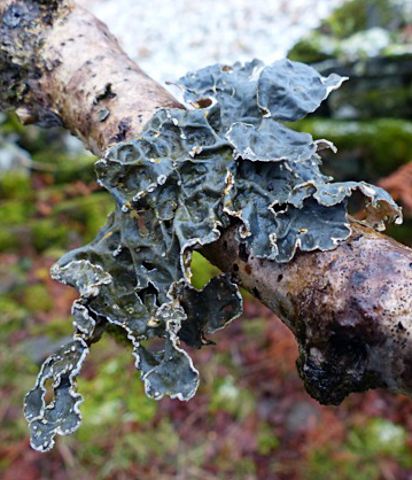
Other lichens associated with ancient humid woods included Fuscopannaria
sampaiana, on the left, surrounded by Degelia cyanoloma which covered
most of the Ash trunk, and a few patches of Pseudocyphellaria norvegica,
right, on one of the Hazel bushes.
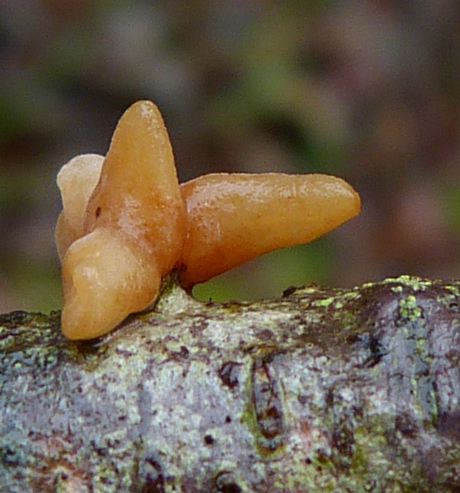
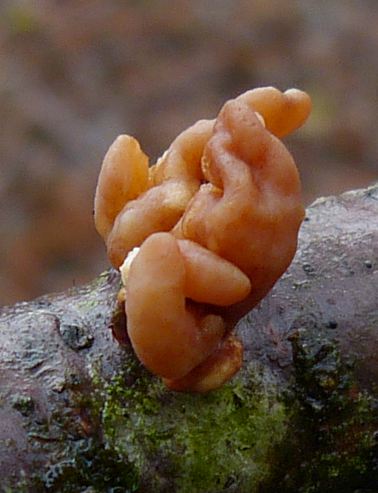
This was a major puzzle, a dead branch on a
live Alder had these strange growths all along its length, and another
branch found on the ground had the same. They turned out to be Macrotyphula fistulosa
var contorta, a short and squat variety of the Pipe Club fungus which is
normally long and thin and grows on the ground. I had never seen
this fungus before in any of its guises, so definitely the find of the
day as far as I was concerned.
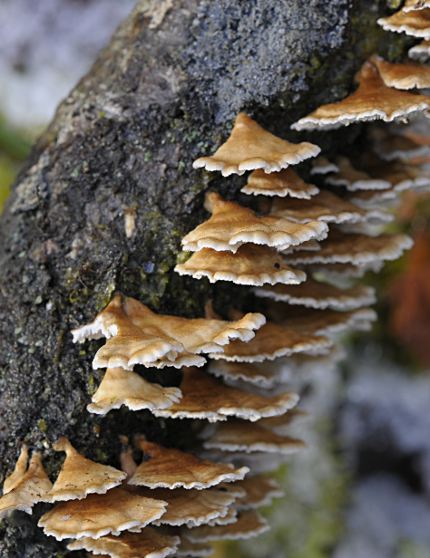
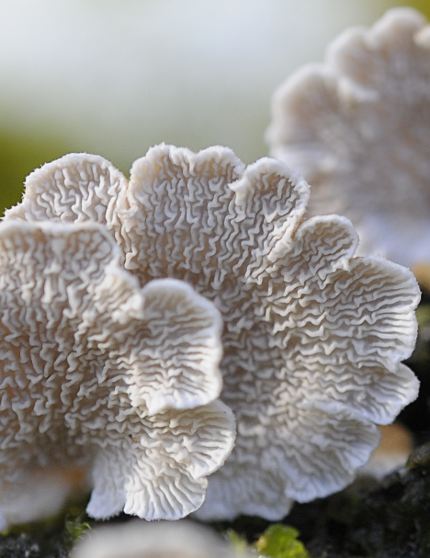
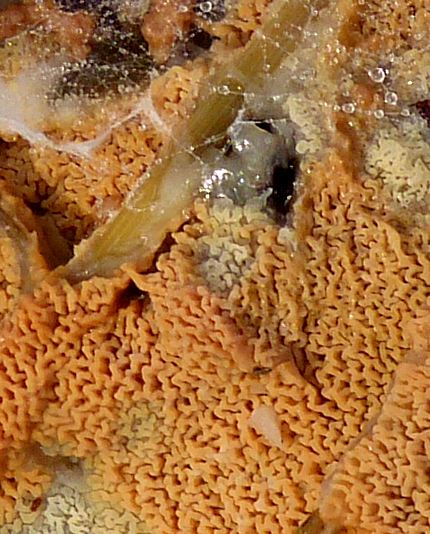
It's always a pleasure to find Plicatura crispa, surely the most elegant of the bracket fungi. Rob found these on a
fallen hazel branch but I've rotated Jan's photo to show them as they
would have been when growing. The right-hand photo shows the
underside.
This one's gills are even more contorted. Phlebia tremellosa,
found by Rob on a fallen birch branch. Most of it was spread over
rotting Birch Polypores that were on the branch, though it was directly
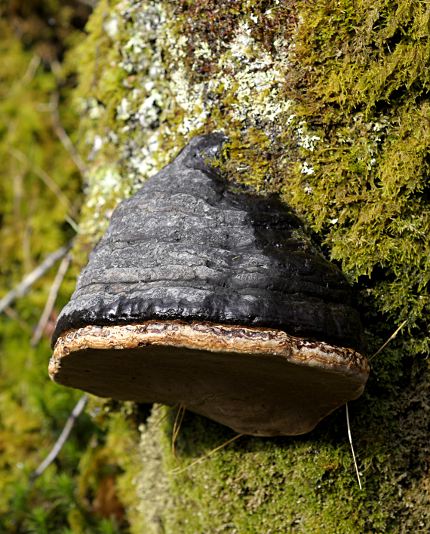
on the bark in places too. On the right is a magnificent old Hoof
Fungus, a common denizen of birchwoods.
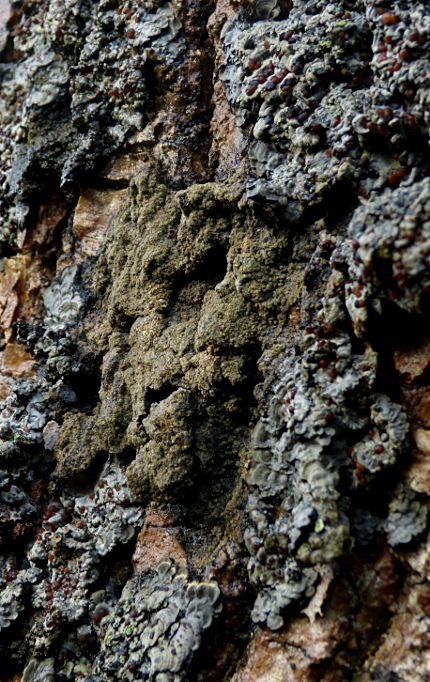
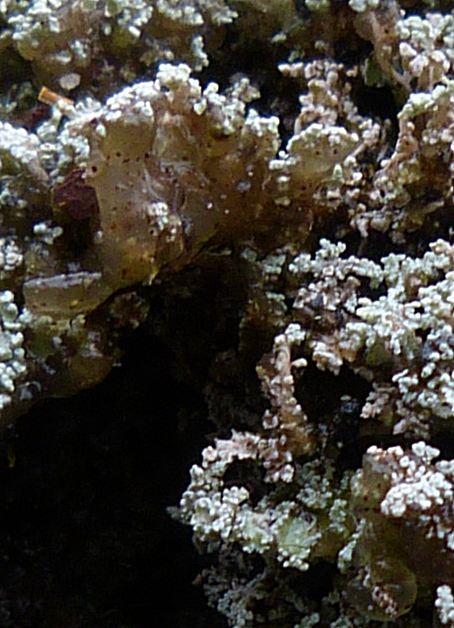
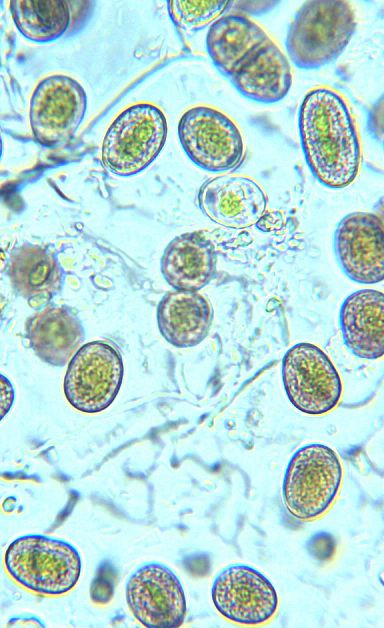
Apologies for this very poor photo of the common rock lichen Stereocaulon vesuvianum, but it's of interest because of the jelly that surrounds all the stems. I'd never seen anything like this before and brought home a piece of the jelly to look at under the microscope, where it turned out to contain algal cells. I would welcome any ideas as to what is going on here.
Hopefully one of our knowledgeable members, or someone else who reads this, can enlighten me.
The sight of St Cyril's well brought great relief to all, as I'd
promised we'd have our lunch there. The saint must have been a
lichenologist as his well is situated at the best place in the wood for
lichens.
Nephroma parile on a frosty rock among lichen-rich
hazels near the well. This species is normally on wood, but like
all foliose woodland lichens it can sometimes be found on damp mossy rocks
beneath the trees.
Finally Jan's shot of a brave Herb Robert flowering in the December cold. Birds seen on the walk included Jay, Woodcock, Long-tailed Tit, Redwing, Goldcrest and Treecreeper. Notable lichens other than those mentioned included Usnea rubicunda, Peltigera collina and Leptogium lichenoides. Fungi included Leafy Brain, Willow and Birch Jelly Buttons, Oyster Mushroom and a couple of Chanterelles. Next walk Tue 30 Dec. Venue to be announced.
|