|


| 29 October 2013 LNHG midweek field trip to Loch Balnagowan, Lismore
8 mainland members and 5 Liosachs got together to record fungi and
anything else we could find at the south end of Loch Balnagowan.
There were so many grassland fungi at the place where we parked that
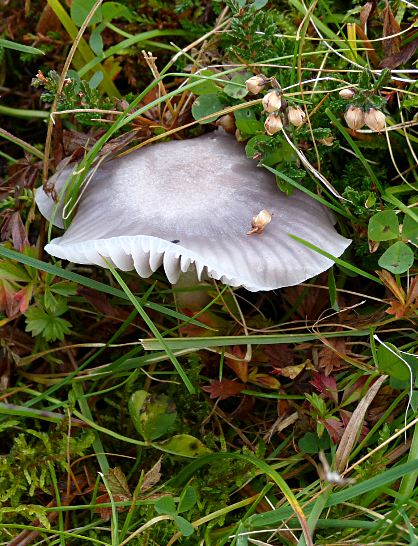
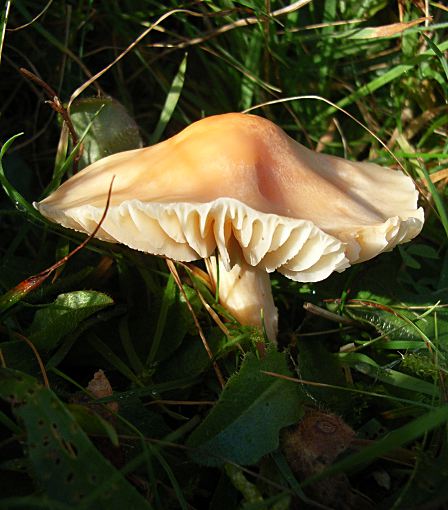
it began to look as if we'd never get to the loch. This Grey Waxcap
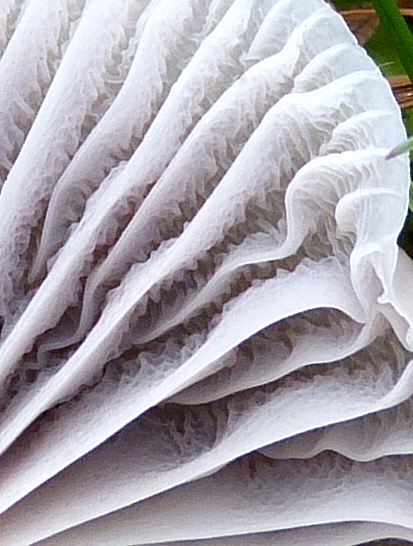
was one of the best early finds. The close-up shows the
interveining between the gills.
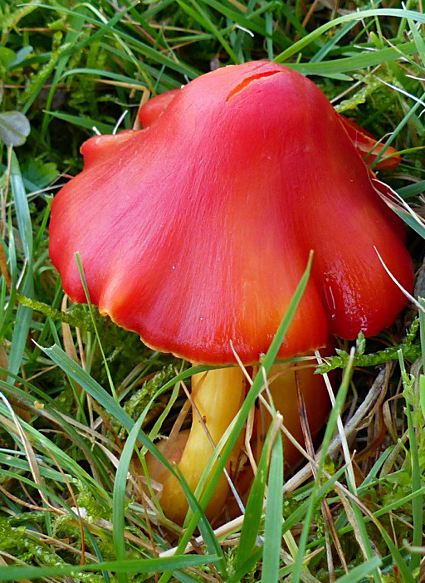
Another pleasing find was a large colony of the Splendid
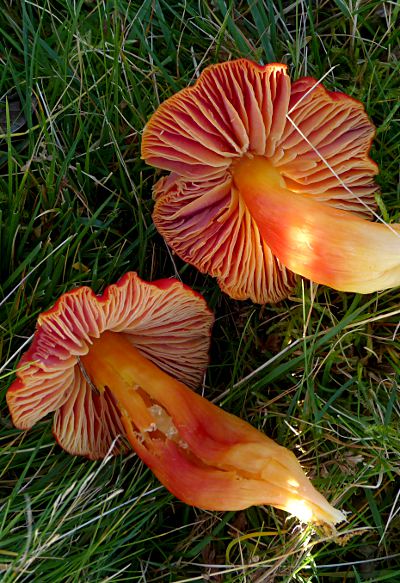
Waxcap, in all shapes and sizes. This species often shows some
distortion, and several of the smaller fruitbodies had two stems instead
of one, like that in Cynthia's photo on the left. The RH pic shows
a couple of big ones with single but bloated stems.
Sallie's photo of the Crimson Waxcap shows the streaky stem which is the most obvious point of difference from the Splendid Waxcap. However the latter should always be checked for the honey smell which it gives off on drying. On the right is the Meadow Waxcap, also by Sallie. A total of 13 waxcap species were found, equalling our highest ever total on a single outing, and if it had been a dedicated Waxcap Wander we'd probably have broken the record as I think there were a few that got away this time. Here are the ones we did get, in the order in which we saw them.
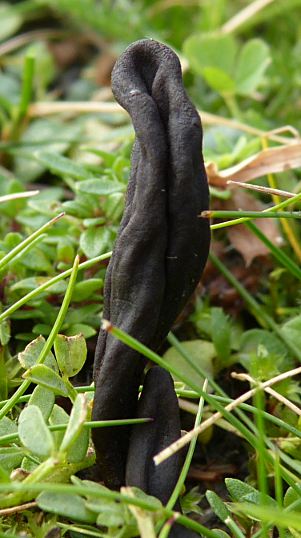
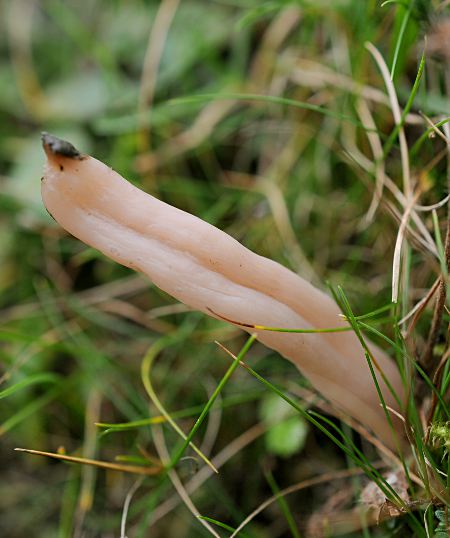
Eagle-eyed Liz spotted an earthtongue, the first I'd seen this year, which turned out to be Geoglossum umbratile. Earthtongues along with waxcaps are important indicators of unfertilised grassland. The item on the right, found by Jan, looks exactly like Smoky Spindles (Clavaria fumosa), as we said at the time, but it was growing on its own whereas Smoky Spindles is always in dense clusters. Its spores were also far too big for Smoky Spindles. I can't match it to any grassland club fungus, so either it's new to Britain or it's just a common species behaving oddly (guess which of these is more likely!) All we can do is keep an eye out for any more like this on our Lismore forays, and see if they throw any light on what it might be. We did find 3 identifiable grassland club fungi:
Clavaria fragilis (White Spindles),
Clavulinopsis corniculata (Meadow Coral) and
Clavulinopsis helvola (Yellow Club).
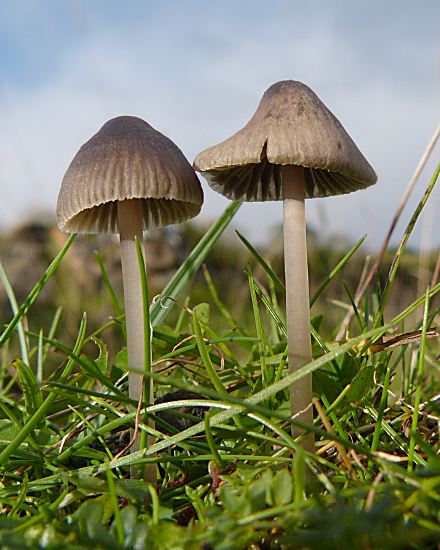
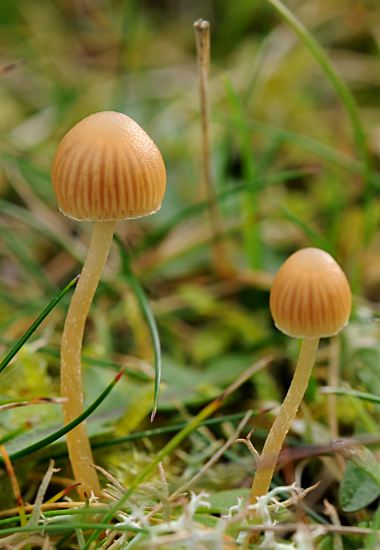
More unknowns. A Mycena found by me and a Galerina from Jan. One day we'll be able to indentify all these mini-mushrooms to species level, just as we can now (usually!) with waxcaps. In the meantime we can only admire their beauty.
Due to being endlessly waylaid by grassland fungi we never got as far as the woods,
but we did visit some isolated trees which added several fungi to our list.
Purple Jellydisc on cut surface of beech
Bulbous Honey Fungus at the base of an ash
Jan's photo of the rock surface, with red, yellow, black and white lichens, mineral veins and possibly snail trails. 2 Rock Snails are in the top left corner and a bit of Wall-rue in the top right.
A big thankyou to all the Liosachs for taking us to and from the ferry in their cars, showing us where to walk, making so many fine fungal finds and being such good company.
|