|


| 30 September 2014 Moth traps, bird ringing and fungus walk at Lagganbeg, Glen Euchar
Today's event was hosted by Rob Lightfoot, who regularly traps birds in his garden and rings them under BTO licence. This gave us an opportunity to see and photograph common garden birds at close range. Also three moth traps were set up overnight in various parts of the garden and surrounding area. Clive Craik, who brought one of the traps, and identified all the moths in the morning, had left a thermometer in his trap to measure the minimum overnight temperature. This was an amazingly mild 13°, resulting in many more moths than might have been expected at this time of year. We brought the traps into Rob's garage to open them, so
conditions were not ideal for photography, but a lot better than they
would have been outside in the rain.
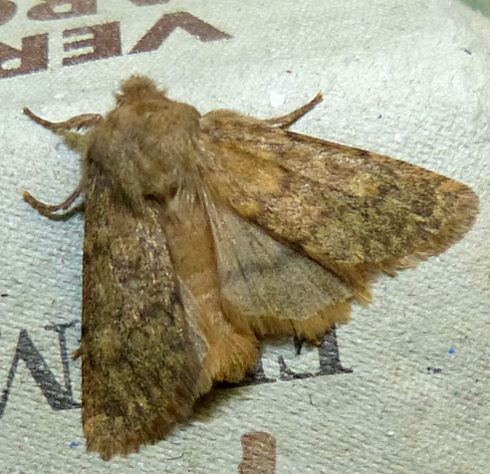
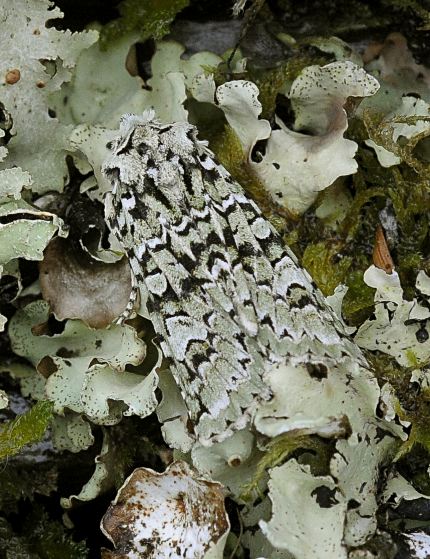
The Brindled Ochre (left) was a good catch. The NBN
shows only 4 previous vice-county records of this species, which include
one by Clive at Barcaldine and one from me at Taynuilt. There were
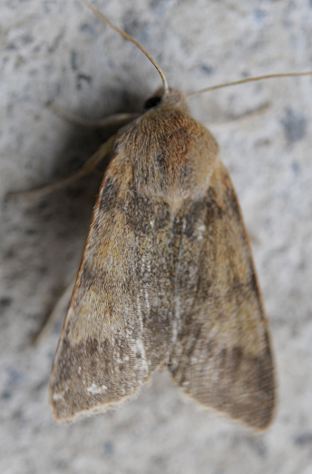
3 Flounced Chestnuts (right), one in each trap, another species seldom
recorded in our area.
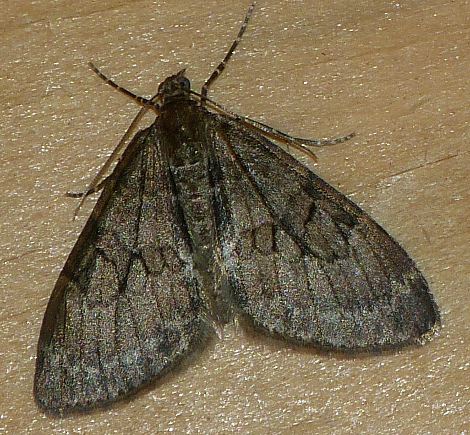
The most numerous species in the traps were Grey Pine
Carpet (left) and the very similar Spruce Carpet, severely testing our
ability to distinguish between them. The figures for these two species
in the table below are approximately correct but one or two borderline
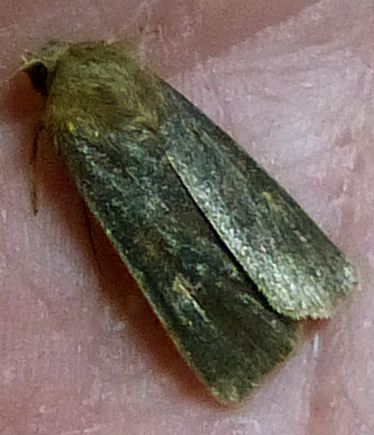
cases may have gone into the wrong column. On the right is the
night's most difficult moth, which turned out to be a melanic
Square-spot Rustic. A melanic is a black or very dark form of a
moth, where all the normal markings are obscured.
Jan's fine photo of an Angle Shades, which
regularly has one generation in May-Jun and another in Sep-Oct.
More surprising was a second-generation Small Angle Shades in the trap,
a moth that normally has only one generation this far north. Other
unusual second-generation moths in the trap were The Flame, Flame Shoulder
and Pinion-streaked Snout. Clive, who has been trapping for over
30 years, says he never used to get species like these in the autumn.
Whether double-brooded ones are moving north due to climate change, or
whether the existing population is changing its habits, would, I
imagine, be difficult to determine.
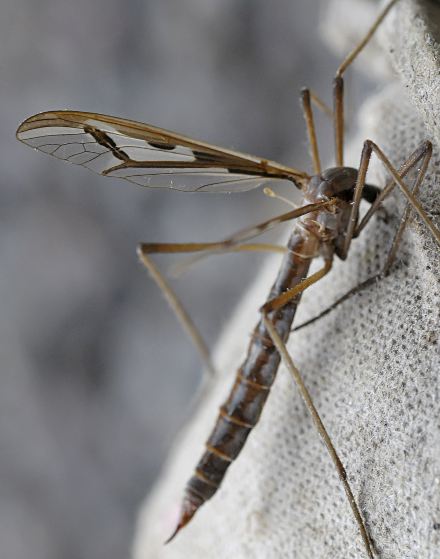
Among other insects caught in the traps were a large number of wasps (of which the one I examined was a female Common Wasp, Vespula vulgaris), some of Rob's honey-bees, an earwig and this cranefly, easily identified by its wing pattern as Pedicia rivosa. The earwig set off a discussion as to whether earwigs could fly. On looking it up in my earwig book (ok, it's not just about earwigs) it says "Although this species can fly, it is extremely rarely seen to do so and is mainly active at night" (Marshall & Hayes 1988). This refers to the Common Earwig, Forficula auricularia, which was the one in the trap and is the only earwig species known from Argyll, though the Lesser Earwig may also occur here and should be looked out for in compost and manure heaps. The Merveille du Jour moth on the right was not caught at Lagganbeg but was brought along by Clive to show us, having caught it in his own trap at Barcaldine before he set out. A striking sight against a plain background, it almost disappears on a lichen-covered twig. Here are the night's totals at Lagganbeg.
* = micro-moths While we were emptying the moth traps, the bird traps were filling up nicely...
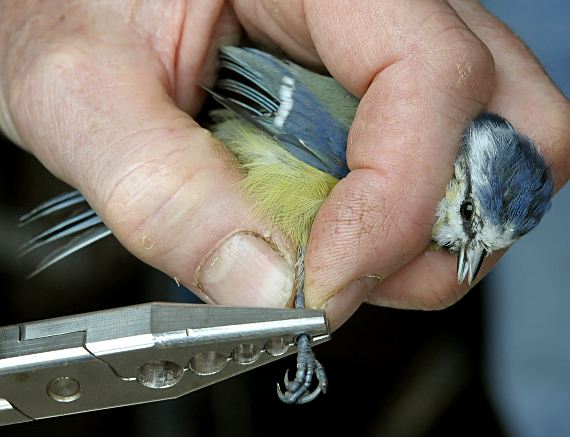
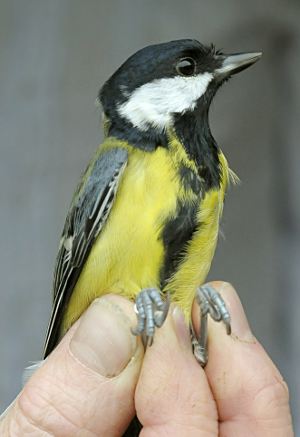
A Blue Tit watches its ring go on, while a Great Tit eyes its escape route.
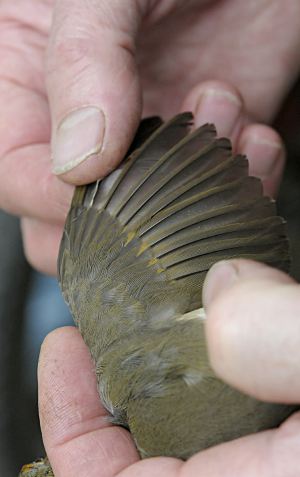
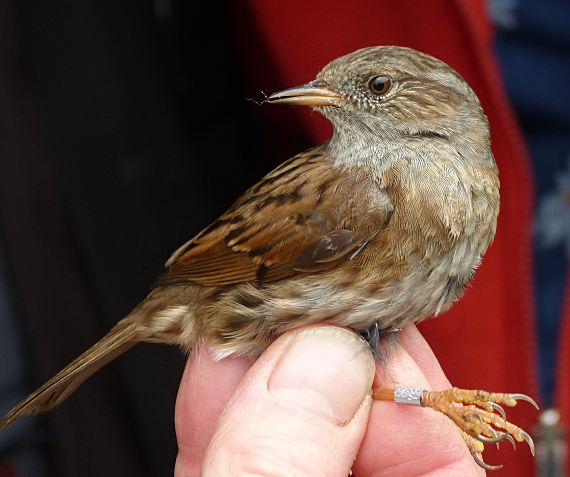
Assessing the age of a Robin, and a Dunnock ready for release.
Glen Euchar and Loch Scammadale from Lagganbeg
You can almost guarantee to find Mycena bulbosa in any
thick clump of Soft Rush in damp open ground in September. I
got this one at the first attempt, and Jan was there to do it justice
with the camera. You have to plunge deep down into the dark dank
core of the clump to find it. It is extremely small.
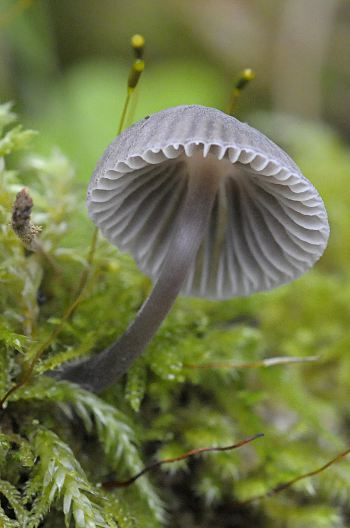
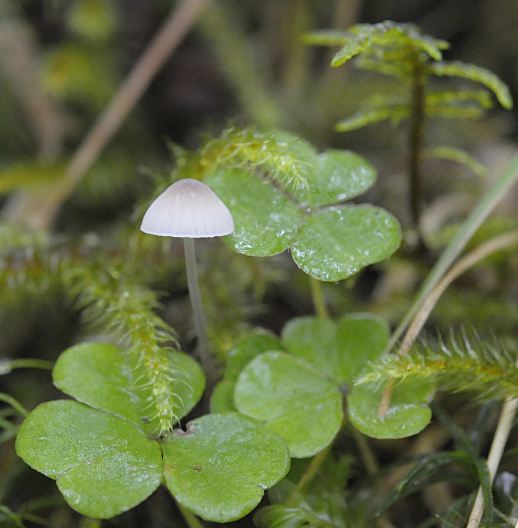
In a gorge lined with ancient hazels, Rob found Mycena leptocephala (left) and Jan found Mycena filopes (right). Complete list of identifiable macrofungi found, in order of appearance.
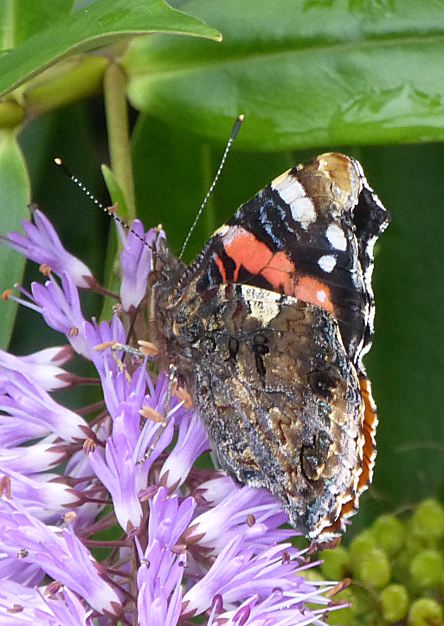
Red Admirals are having a bumper season. Rob reported at least 14 in his garden yesterday, with no other butterfly species present. Today in duller conditions there were just one or two there. Thanks to Rob for hosting the event and providing
tea and cake, and to Clive for bringing his trap and identifying
the moths, and to everyone else who came for not being put off by the
forecast of non-stop heavy rain. In the end we stayed dry
throughout.
|