|


| 18 October 2014 Joint Foray with Clyde & Argyll Fungus Group at Fearnoch
No less than 18 eager forayers turned out for our tour of this famous fungal hotspot. It was very warm for the time of year, and a lot drier than was forecast. The occasional showers were over very quickly. Fungi were not as prolific as on our 2011 visit, but
with so many pairs of eyes we kept foray leader Dick Peebles busy with
our finds, most of which he was able not only to name but tell
us a good deal about, including which to avoid, which to eat, and even
how to cook them.
The Bitter Beech Bolete, which as its name suggests is
not edible. It is identified by the red stem which is yellow at
the top and covered all over with a ridged network, together with the whitish to
pale buff cap and yellow pores (not visible here).
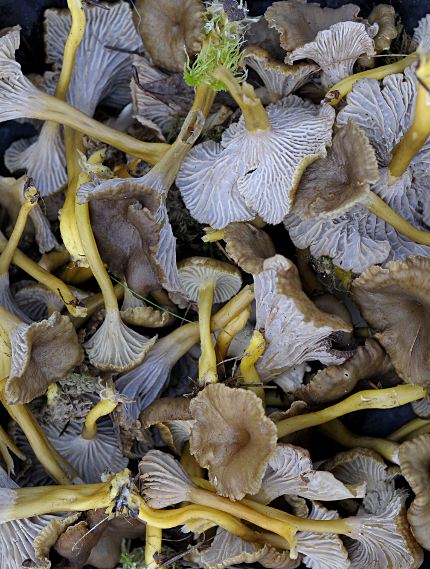
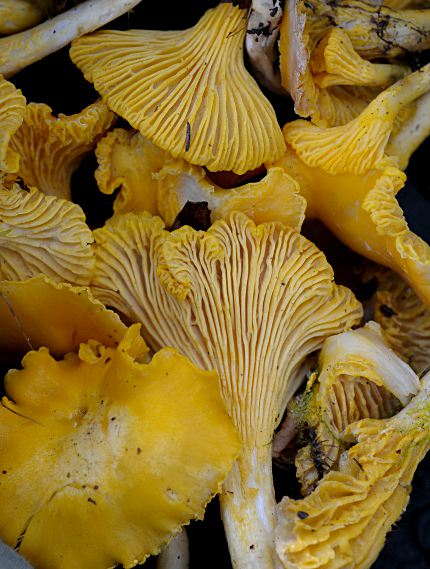
Seven species of chanterelle are known from Fearnoch but
most of them are pretty elusive, and the way this year's fungal season
is stuttering along we were never likely to find more than the Winter
Chanterelle (left) and the Common Chanterelle (right).
Almost as good eating as the chanterelles is the Hedgehog Mushroom,
whose underside looks like this.
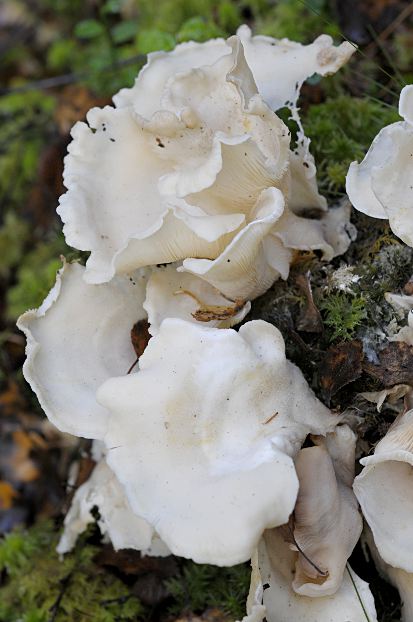
Angel Wings, which grows on dead conifer wood, is very
common in Argyll forestry plantations. It used to be regarded as
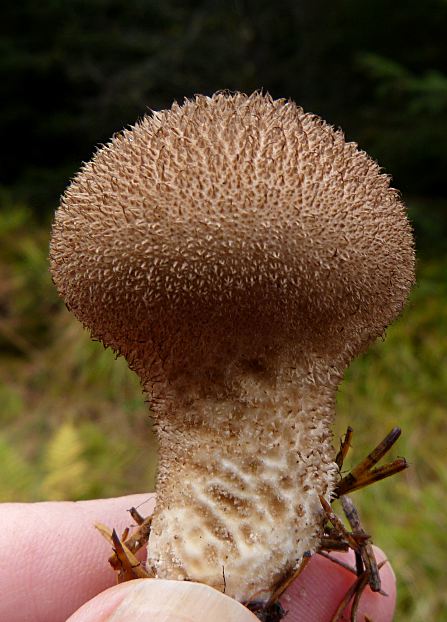
edible but is now considered suspect. The Dusky Puffball is also
fond of conifer plantations. Unlike the Common Puffball it is
regarded as inedible.
Enough of this culinary commentary, I'm a naturalist not
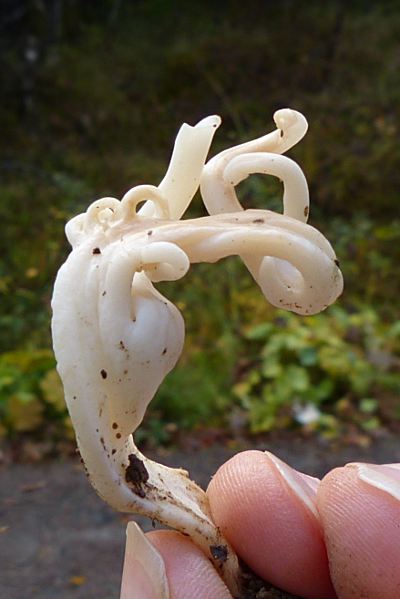
a foodie. This is Clavulina rugosa, the Wrinkled Club, found by
Tina. It is normally straight as in the left-hand picture, but the
one on the right must have felt inspired to try something different.
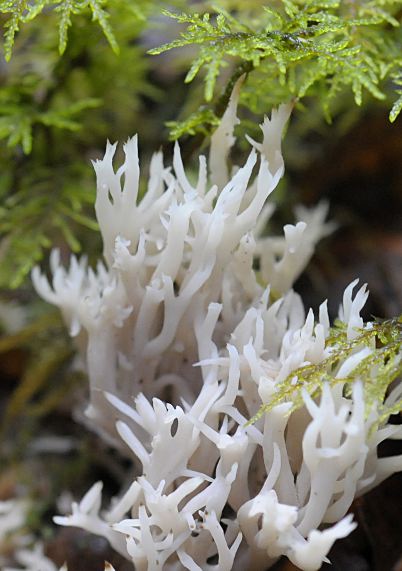
Closely related to the Wrinkled Club is Crested Coral,
which is shorter and densely branched with crested tips. It is
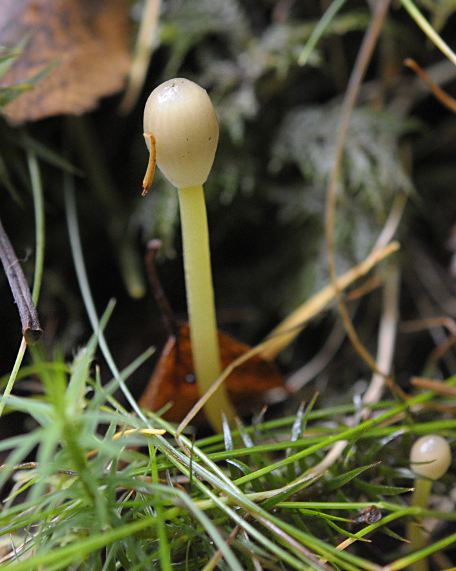
very common on the forestry floor. On the right is Jan's photo of
a young Yellowleg Bonnet, with debris already attaching to the
unopened slimy cap.
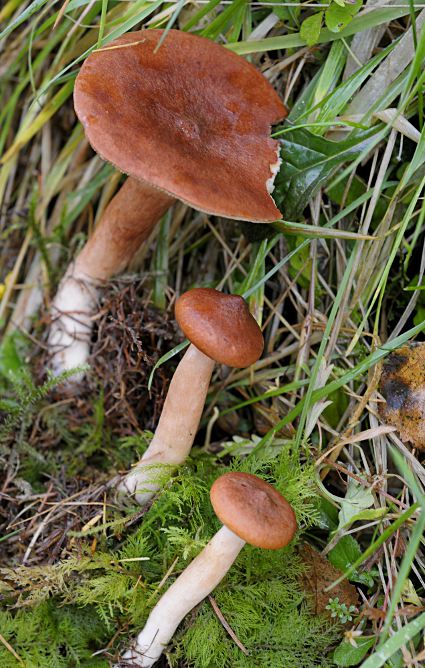
The Curry Milkcap, which smells strongly of curry when
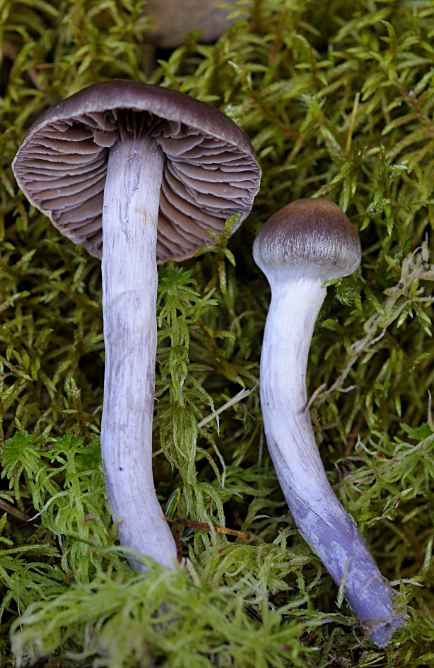
dried, and the Purple Stocking Webcap (Cortinarius integerrimus; the
English name covers a group of species) which has a honey smell.
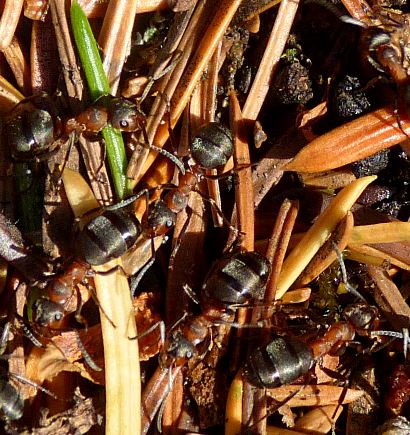
Fearnoch Forest is famous for its numerous large nests of the
Scottish Wood Ant. Jan's photo
on the right shows one of them on the other thing Fearnoch is famous
for.
|