|


| 12 March 2016 Strone Hill woods
Strone Hill woods is an area of ancient oak woodland with bilberry understory, owned by the Forestry Commission and set among coniferous plantations. Footpaths wind through the woodland and down to the river Lochy
Apart from oak the only trees present in any numbers
were birch and rowan, with many of the rowans being deer-damaged
saplings. At this time of year we are on the lookout for lichens,
and though these were plentiful there was not the range present that we
find in woods near the coast.
Hypotrachyna taylorensis was one of the most conspicuous
lichens on the oaks. It develops rolled-up hanging loops and a
jumble of small detachable fragments proliferate from its surface.
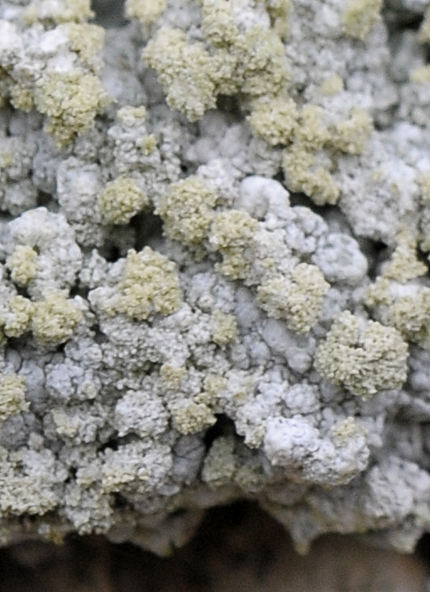
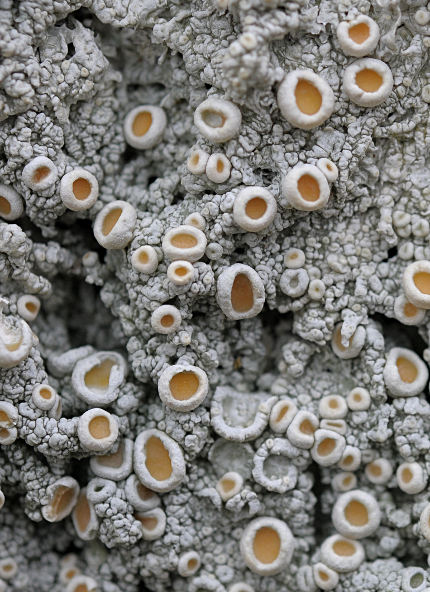
Ochrolechia androgyna (left) was very plentiful on the
oak trunks, with Ochrolechia tartarea (right) considerably less
frequent. The latter has abundant apothecia but the former has few
or none of these and instead has mounds of greenish powder which turn
pale yellowish-white when dry, as seen here.
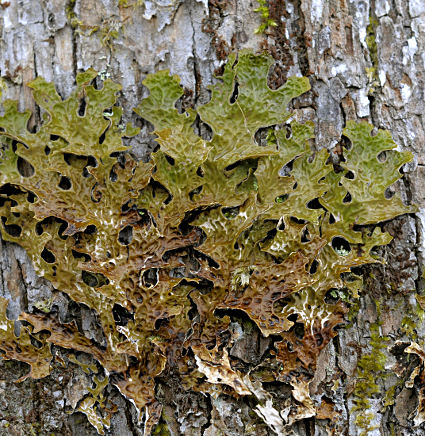
Despite its age and reputation the wood was almost entirely lacking in lichens of the Lobarion community which is so dominant in west coast woods such as Glen Nant that we visited last month. Eventually Jan spotted two patches of Lobaria pulmonaria on an oak, one of which is shown above left, not looking particularly healthy. We saw no more of it or of any other Lobaria species. Our only other encounter with lichens of the Lobarion
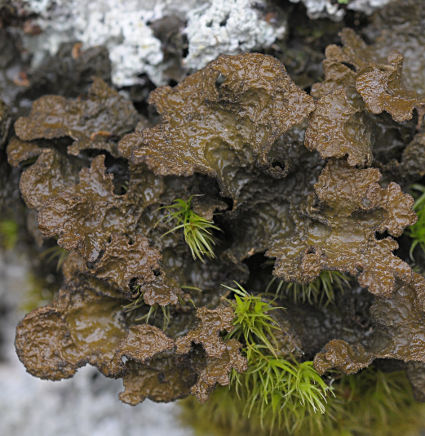
community came with a
pair of close-growing rowan trees that had no less than 3 Sticta
species growing on them. Sticta sylvatica is on the right above.
The other two were Sticta fuliginosa, left, and Sticta limbata, right. We saw no Degelia, Pannaria, Leptogium etc. The shortage of Lobarion community lichens was difficult to explain but we conjectured that the site may simply be too far east from the coast and not have a true Oceanic climate. Which emphasizes how special the woodlands are along the narrow western coastal strip. We were surprised at the lack of hazel in the woodland.
The soil is probably too acidic for it. Woods that are rich in
Lobarion lichens generally have plenty of hazel, but these lichens grow
just as readily on old oaks, so the lack of hazel cannot be the reason
for their absence.
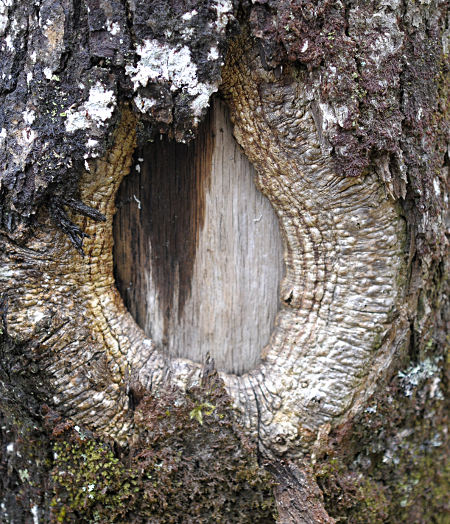
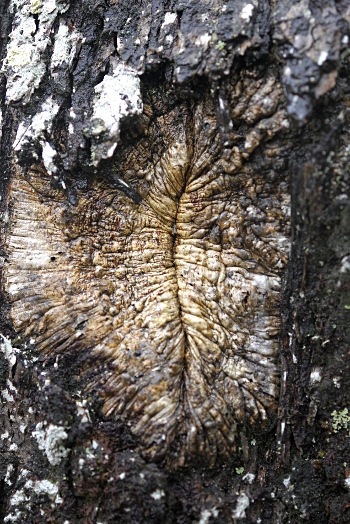
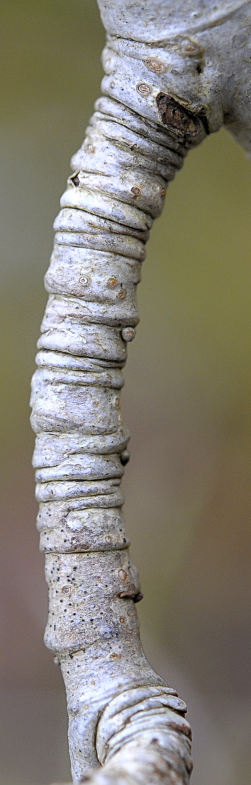
As well as copious deer damage there were interesting
effects from where branches had been lopped off long ago to keep the
path clear. Jan took these photos of how the oak deals with these
wounds.
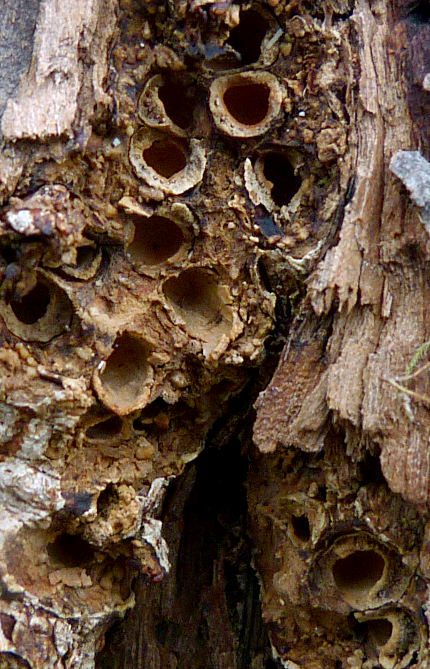
Old galls of the wasp Andricus quercuscorticis in
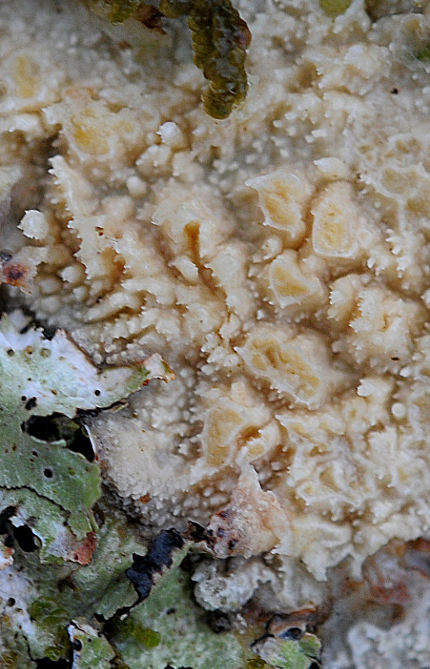
decaying oak bark, and a pale waxy tooth fungus on a fallen oak branch,
Radulomyces molaris. The NBN has no previous VC98 records for
either of these.
I took this to be an old Birch Polypore
until I noticed it was on oak. I then idly wondered if it might be
the rare and iconic Oak Polypore, of which I'd heard much but seen none. Alas it was too decayed to yield
any useful clues one way or the other. It did have the remains of
pores on the underside. Maybe I'll pop by in autumn and see if a
new young one has appeared.
By contrast these Bitter Oysterlings were in perfectly
fresh condition on a fallen branch.
Witches Butter on oak
Strolling through Strone
|