|


| 13 February 2016 Field Trip to Glen Nant - Plantlife Leaflet Launch
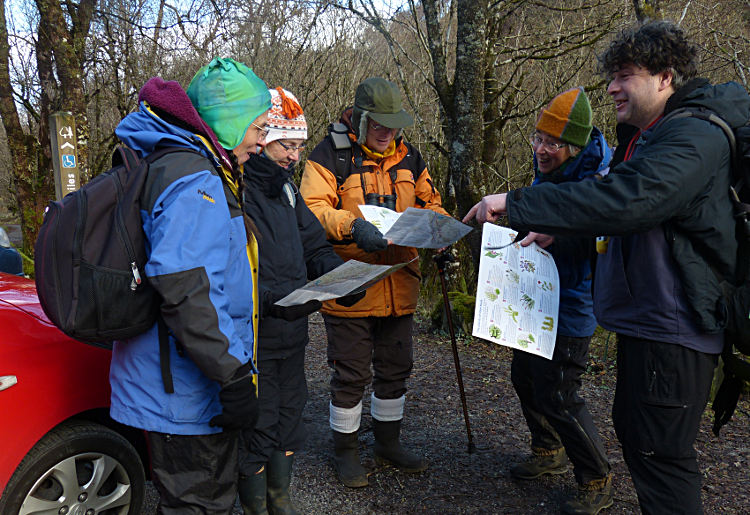
Some of the LNHG party studying the leaflet in the car
park
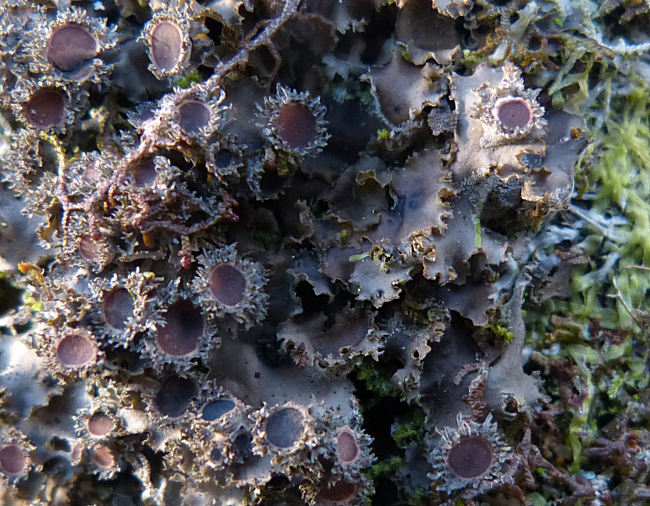
Black-eyed Susan (Bunodophoron melanocarpum) is
one of the special lichens of the Glen Nant woods. The black fruits are on
the underside of the lobe ends, shown here with Jan's camera pointing
from the tree base up
into the sky.
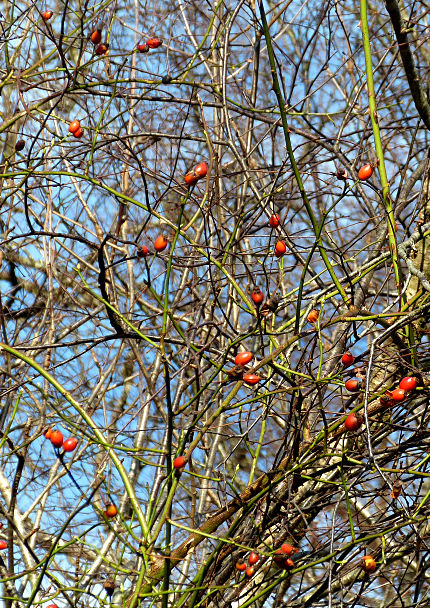
While we're looking upwards, here are the sunny
hips of a Dog Rose that had clambered to a great height among the trees.
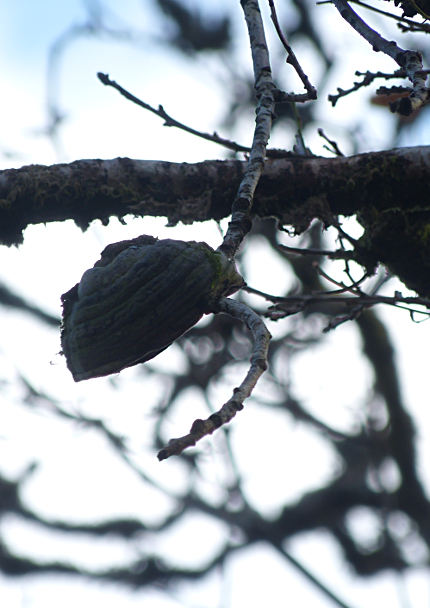
The oddity on the right is a Hoof Fungus on an oak twig.
This tough heavy bracket normally grows on trunks or large branches.
I'd never seen it or any other bracket fungus on a twig much
narrower than itself. The twig will break if the fungus grows much bigger, particularly as it's depleting the twig by
feeding on it. But all Hoof brackets end up on the ground, where
they are hard as iron. We found several that had fallen from birch trunks,
their normal host in these woods.
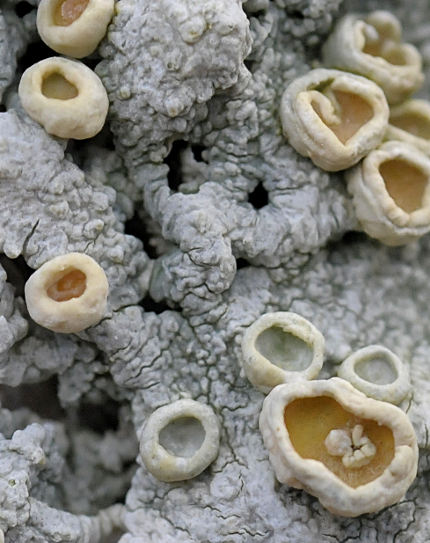
Two crustose lichens, Cudbear (Ochrolechia tartarea),
which is common on oak in our area, and the Barnacle Lichen (Thelotrema
lepadinum), an inhabitant of old woodlands, often on hazel.
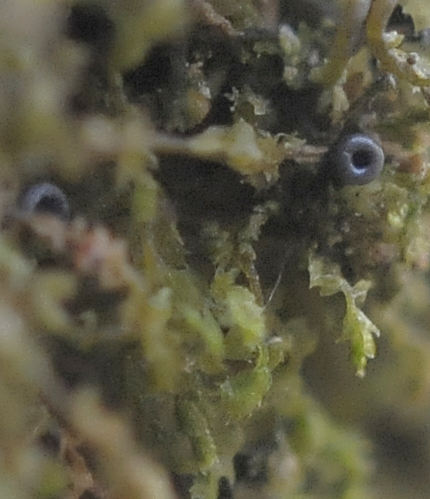
Our old friend the Flute Lichen, found by Jan on birch. The pic on the right shows the incredibly tiny pin fungus Stenocybe nitida, growing on the liverwort Plagiochila punctata, on birch. Andy Acton pointed it out to us and Jan captured this macro shot of the pinheads which are hardly visible even with a lens. Though not lichenised (i.e. they have no algal
component) Stenocybe species are traditionally the province of the
lichenologist, not the mycologist. S pullatula is the common
"Alder Pin" which can be found on almost any horizontal alder branch you
care to examine. But I had not previously encountered S nitida, which the
Lichen Flora describes as "Partially buried in old tufts of leafy
liverworts (usually Plagiochila punctata), especially on old trees and
rocks in damp, humid situations; rather rare" (Smith et al 2009).
P punctata is a liverwort of Atlantic woodlands. These are the
hidden treasures of the Celtic Rainforest.
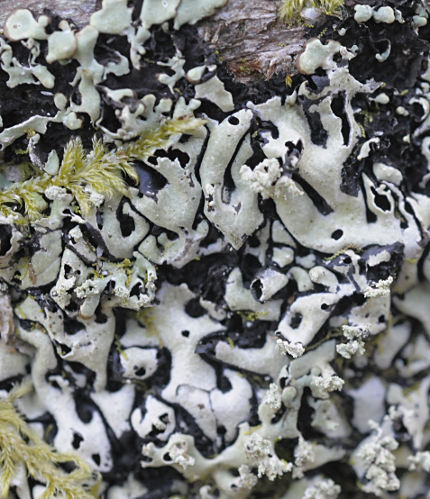
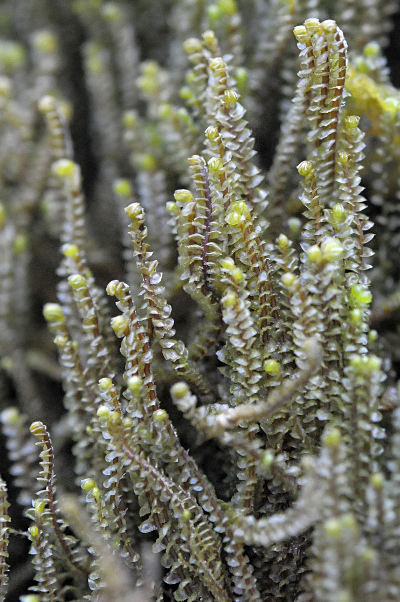
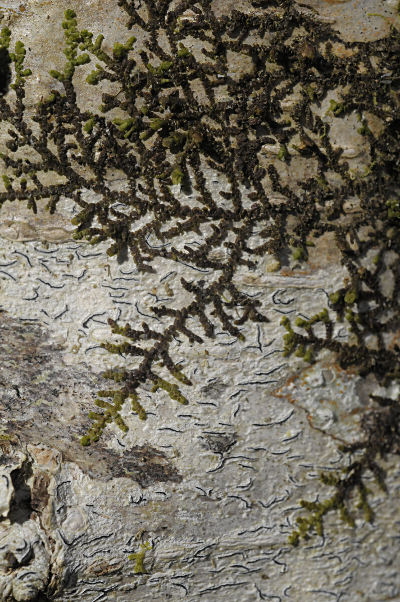
Two more liverworts. Western Earwort (Scapania
gracilis) at the spot where the trail leaflet said it was, and a Frullania species, probably F dilatata, one of the first
bryophytes to grow over the crustose lichens that colonise smooth bark.
As the hazel stem matures, the Frullania is itself grown over by mosses
and leafy lichens, till you end up with this...
The Frilly-fruited Jelly Lichen, growing over a carpet of moss and other lichens on a mature hazel stem. The sun has dried it out, causing it to lose its rich colour and gelatinous consistency; these will return when it rains.
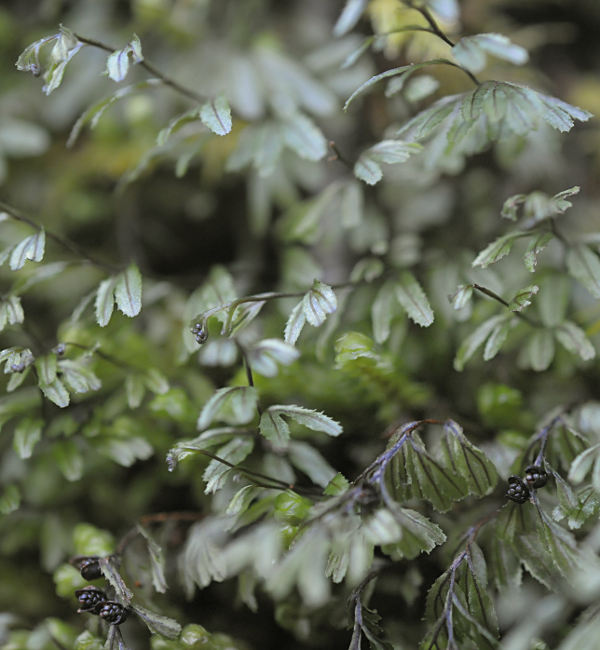
The delicate Wilson's Filmy Fern, with ripe black
spore-cases
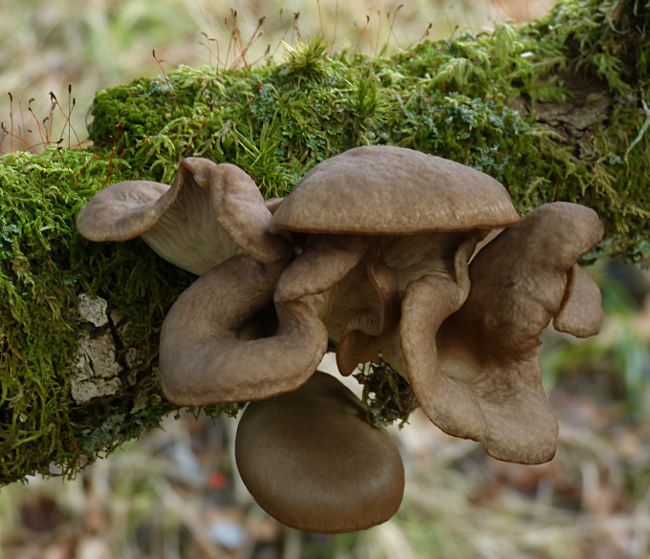
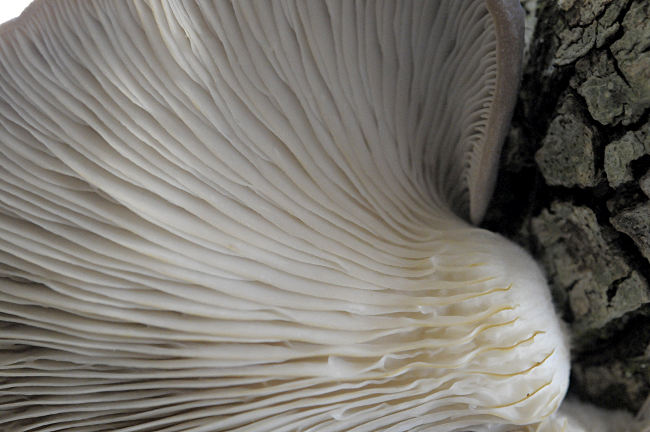
Oyster Mushrooms on a holly branch, and, below, Jan's photo of one of them from underneath, in situ.
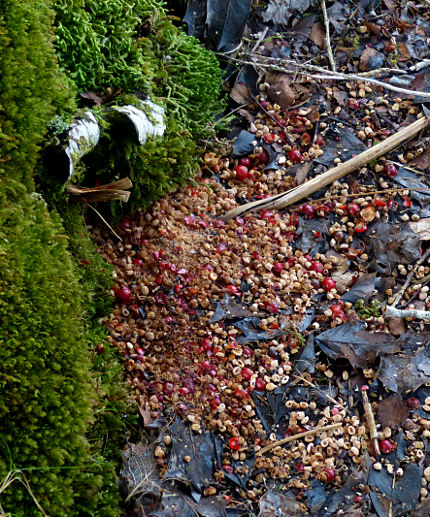
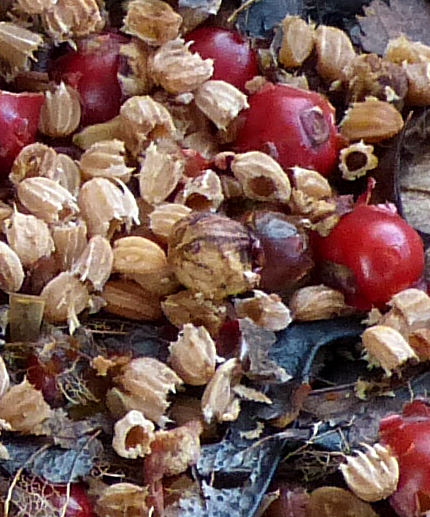
Whoever left this hoard was feeding on the seeds, not the fleshy part of the berries favoured by the Mistle Thrush. We thought a Wood Mouse the most likely but cannot rule out other small mammals. I can find no information on anything eating holly seeds. Birds were very scarce in the wintry woods. Apart from the Mistle Thrush we saw only a Wren and a Woodcock. We were surprised not to see any nests of the Scottish Wood Ant as
they are normally conspicuous on a walk through Glen Nant, and persist
for some time after the ants have deserted them. Their absence on
this occasion was very puzzling.
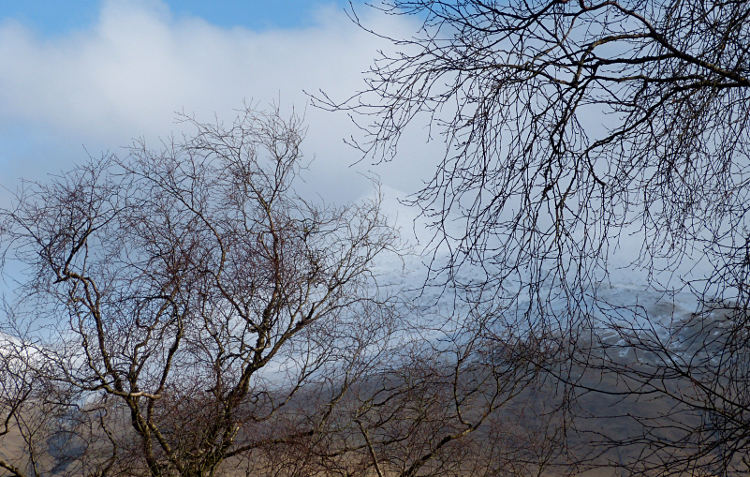
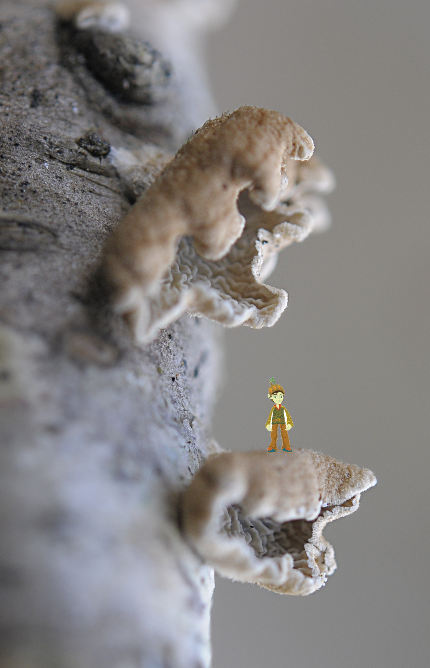
Ben Cruachan through the trees, from a high point on the new Glen Nant walk route. We all thought the route an excellent introduction to what Glen Nant has to offer. The walk leaflet describes 12 species and shows where to find them on the map. We found all of them except no.12, the Gillie Dhu. But maybe if you look carefully you'll spot him hiding in one of our photos. After the walk we went to Taynuilt Village Hall for the Plantlife leaflet launch. The event was opened by MSP Mike Russell who is species champion for Tree Lungwort. This was followed by Stories about the Celtic Rainforest told by Claire Hewitt to an enthusiastic young audience. The meeting was well attended and will have helped to raise awareness of Glen Nant and other Atlantic woodlands here in the west of Scotland.
Previous Field Trip Reports Next
|