|


| 27 January 2015 Glen Creran Woods
Conditions were mostly dry with the odd spot of rain and
occasional glimpse of sun. Lichens on dark trunks in winter
woodland are not well lit so please make allowances for the photography.
I generally take some with flash and some without, but though the flash
ones are much sharper they look nothing like the real thing so I always
end up using the non-flash ones, and so do our other photographers.
Glen Creran Woods SSSI is "outstanding, on a national
and international scale, for its exceptionally rich oceanic lichen
assemblage which includes 4 globally vulnerable species, 19 globally
near-threatened species, 10 nationally rare species and 66 nationally
scarce species." (SNH)
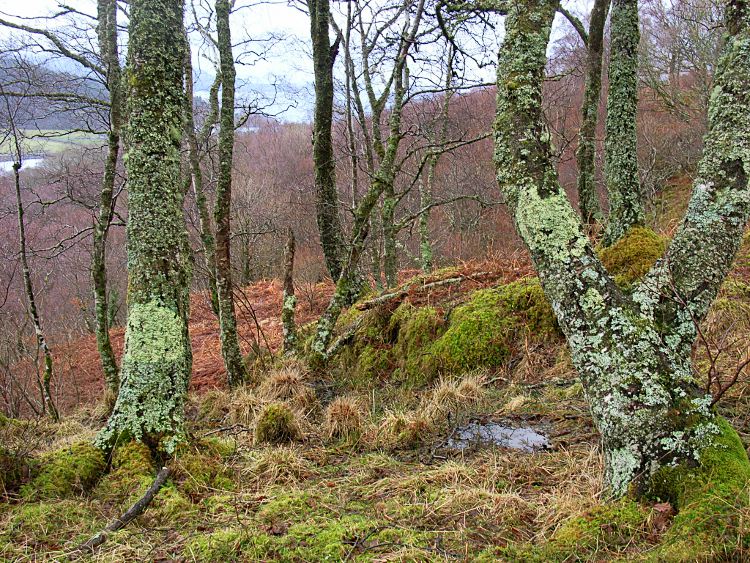
Old birches are plentiful here. In Sallie's photo above the two large
yellow-green patches are Flavoparmelia caperata, common on
birch and probably the only British lichen that can be recognised at
such a distance - you can
often spot it from the car.
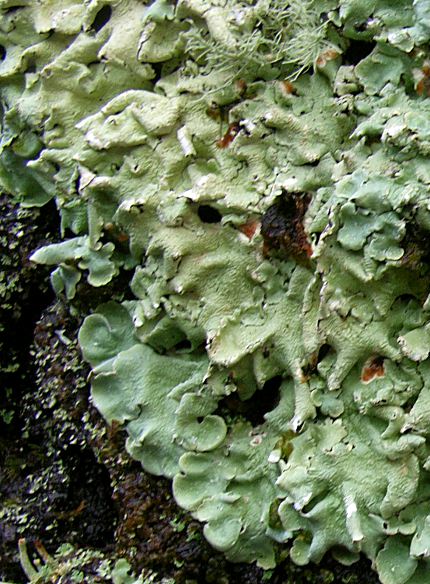
On the left a close-up of F caperata with its characteristic wrinkled
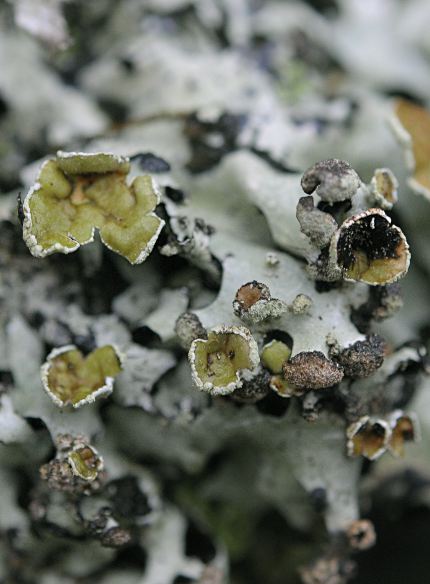
surface. Another very common birch lichen in our area is Hypotrachyna
laevigata. It is usually infertile but in these woods it bore fruit
as shown in Jan's pic on the right.
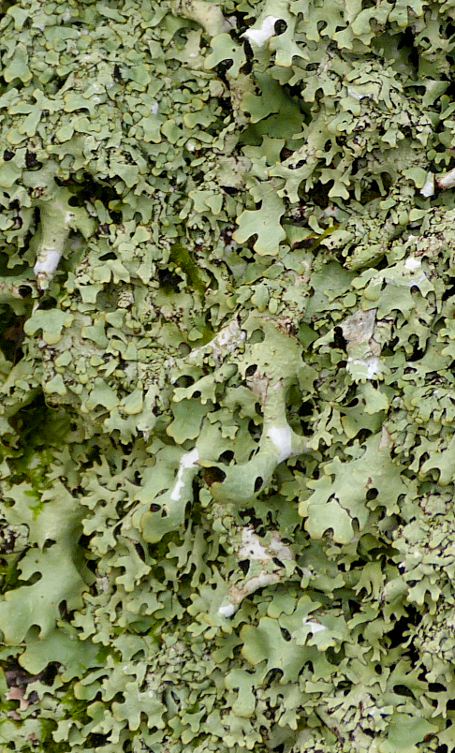
Unlike hazel lichens, those on birch are nearly all the
same colour, a pale blue which is greener when wet (as in the H
taylorensis above which was at the foot of a trunk and had not dried out
as much as today's other lichens). This may be due to the limited
range of algae suitable for lichens on acid-barked trees.
Not a subject that I know much about.
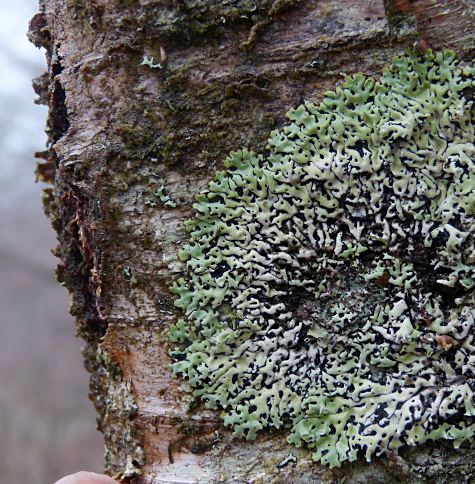
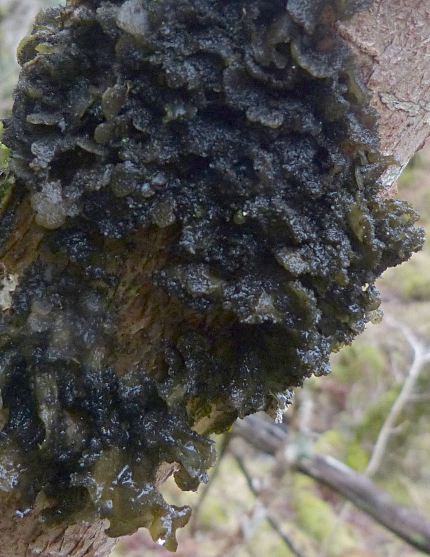
As expected in old oceanic birchwood, we found
several examples of the Flute Lichen, our
Species of the Month. Most of them were small patches hemmed
in by other lichens, but this one has attained a good size and shape.
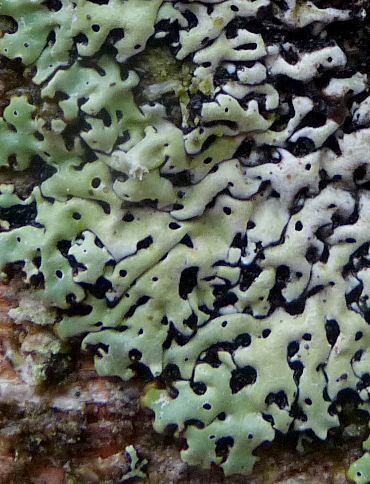
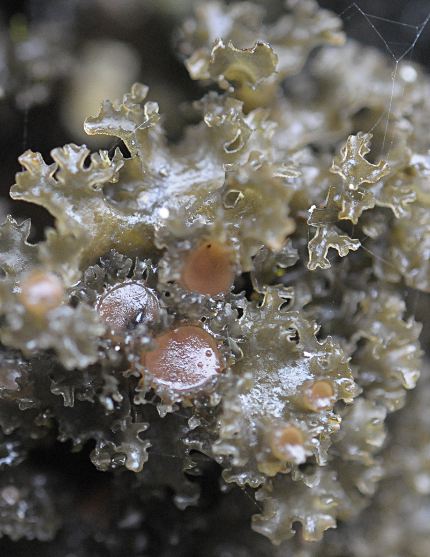
The close-up shows the holes in the hollow lobes. As well as its
usual host of Birch, we also found the Flute Lichen on Alder and Holly.
Hazel with its alkaline bark has a much more colourful
range of lichens, many of which contain cyanobacteria rather
than green algae, and in some cases both. Jan's pic on the left
shows the blue-grey Lobaria scrobiculata (lower half of pic), the
grass-green of L pulmonaria (top), the deeper green of L
virens (left of centre) and the pale blue of Parmotrema crinitum (just
above centre on right). The RH pic shows more P crinitum, aka "Desperate
Dan", on Holly, which in this wood had many of the same species as
Hazel. Desperate Dan is easily recognised by the stubble of black
hairs which arise from the upper surface of the lichen, similar to the
hairs which form "roots" from the underside and
"eyelashes" from the edge in related species.
Hazel also supports a number of jelly lichens, including
the Frilly-fruited Jelly Lichen (Leptogium burgessii) on the left,
easily recognised by the much-incised leafy edging to the fruit, and the
rare L hibernicum on the right. This oceanic species is "dependant
on a very humid climate with more than 200 rain days per year" (Coppins
1976, quoted on the excellent
Oslo Natural History Museum site)
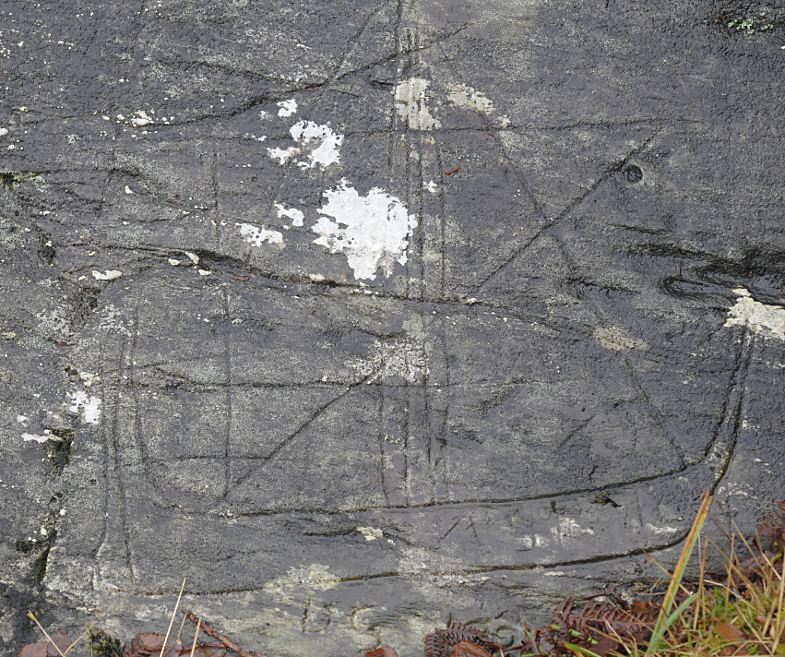
Made it! A GPS is a wonderful thing when you're
lost in the woods. This is the Birlinn carving, dated 1729 but
thought to have been re-touched on that date from an earlier original.
Time for lunch.
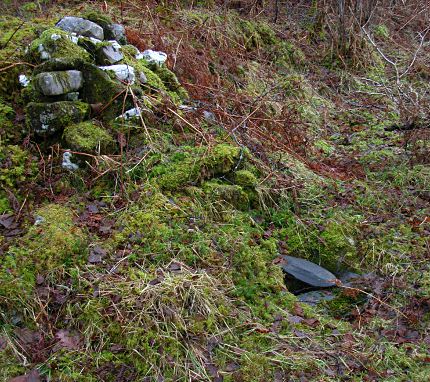
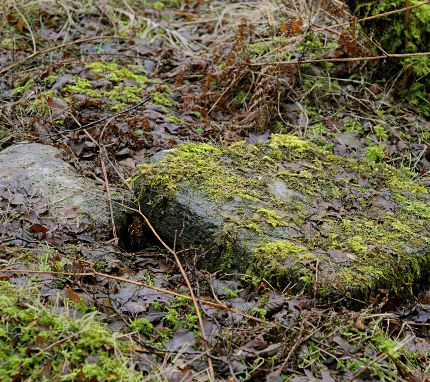
Near the carving are the Well of the Eye (left) and the
Well of the Knee (right). Dip your knee in that and you'll never
have knee trouble again. They are not real wells but hollowed-out
stones which hold rainwater and are covered by the slabs seen in these
photos.
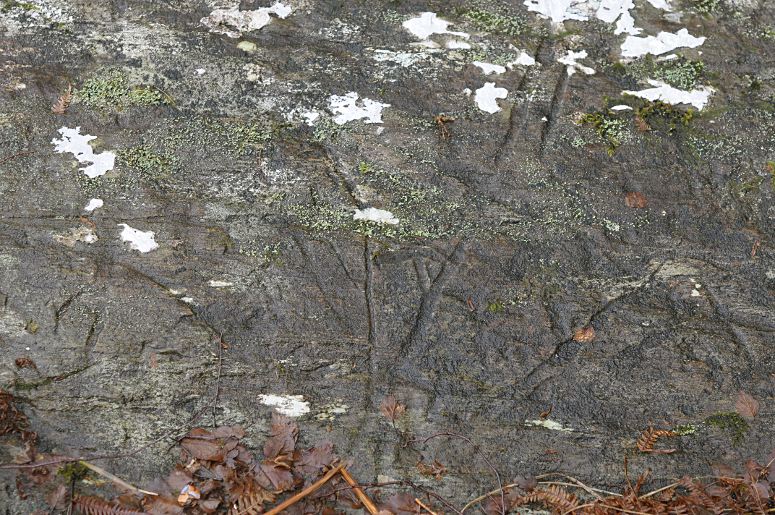
This might be another carving on a rock near the Birlinn, but
we couldn't make out what it was meant to represent and the lines may be
natural features. Where's a geologist when you need one?
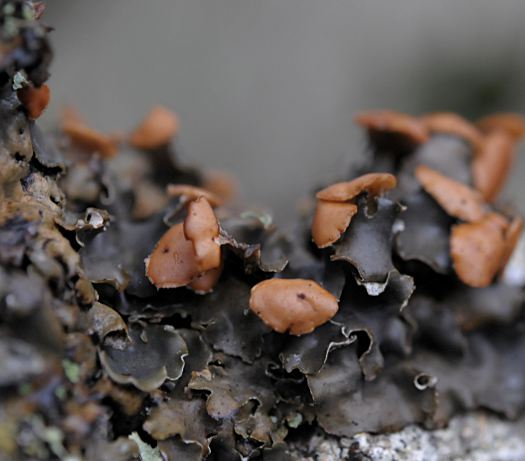
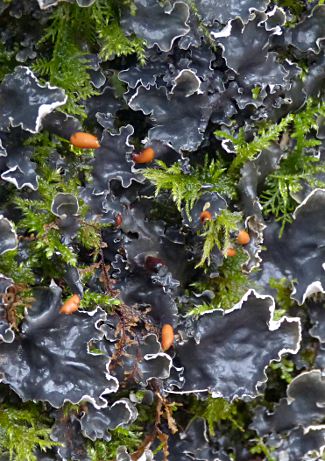
Another ancient woodland indicator is the Horizontal Dog
Lichen (Peltigera horizontalis), recognised by the large fruits which
are held horizontally relative to the lichen surface. On the right
is the more widespread Smooth Dog Lichen (P hymenina) which has smaller
vertical fruits. (the fruits appear at all angles in the photos because
the lichen surfaces that they're growing from are at all angles).
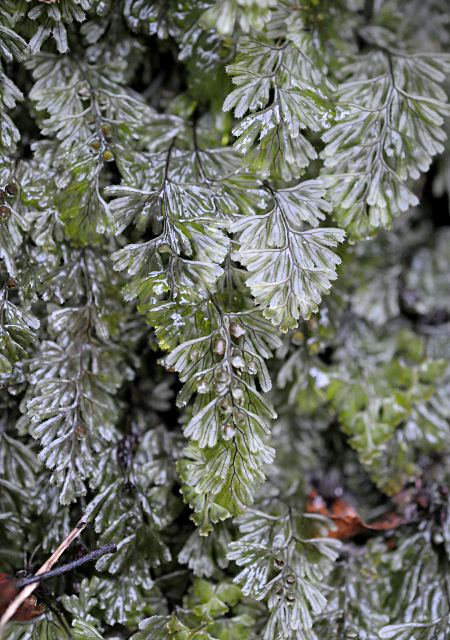
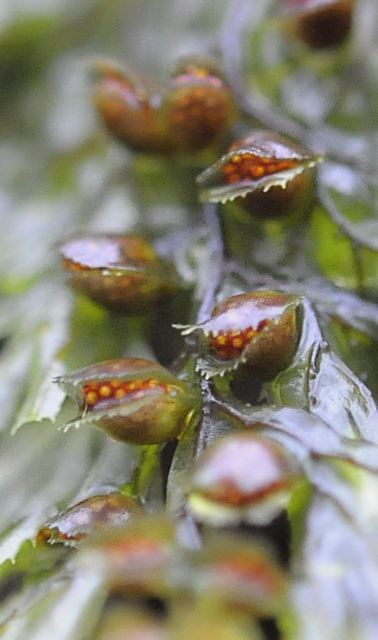
It was pleasing to find a large patch of Tunbridge Filmy Fern hanging over damp shady
rocks. It differs from the commoner Wilson's Filmy Fern in
having toothed valves to the spore capsules, shown in Jan's close-up
on the right.
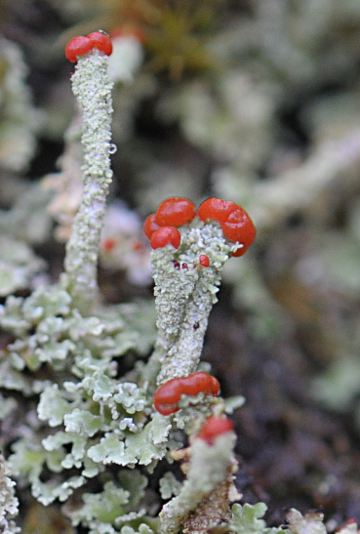
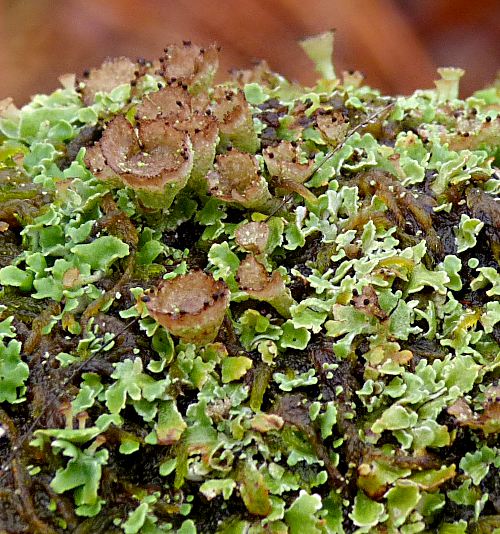
Cladonia species are photogenic but hard to
identify. The one on the left comes out as C macilenta. On
the right is C pyxidata, which is normally on the ground or low rocks
and peat-banks, but is "surprisingly able to grow on Hazel branches in
high-Atlantic hazelwoods" (Alan Silverside)
and that's exactly what it's doing here.
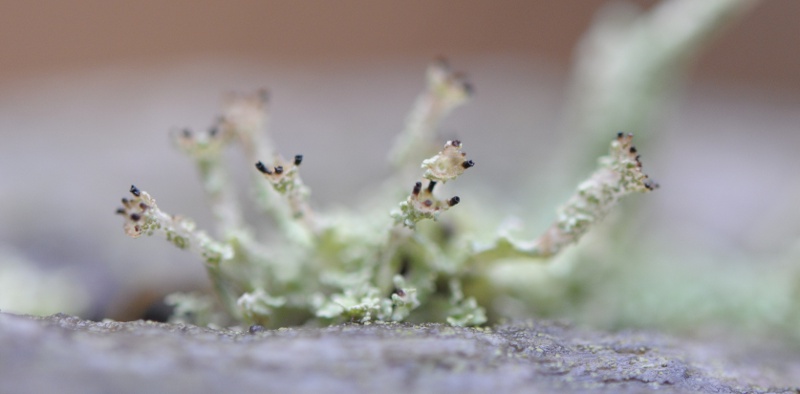
This amazing shot by Jan is probably another C pyxidata
but I can't be sure and didn't see what it was growing on. Worth
including anyway!
Another great shot for Jan's future best-selling Atlantic Woodland
Calendar, if
anybody can persuade her to produce one.
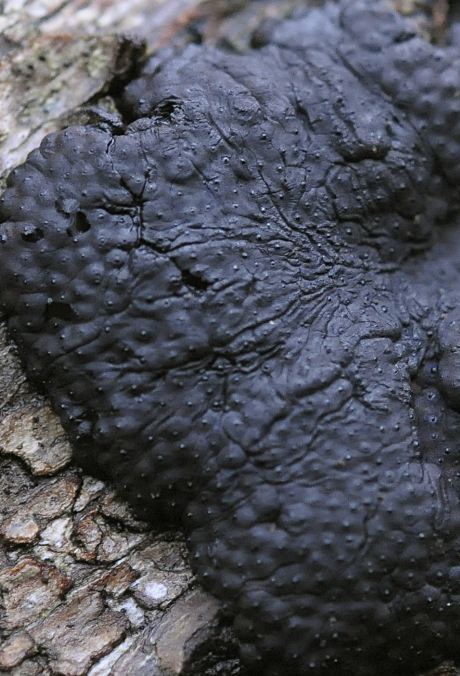
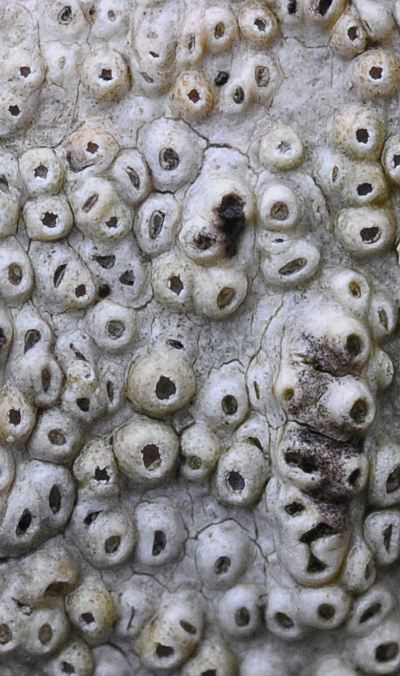
The cinder fungus Birch Woodwart on birch, and the
Barnacle Lichen, Thelotrema lepadinum, on Hazel.
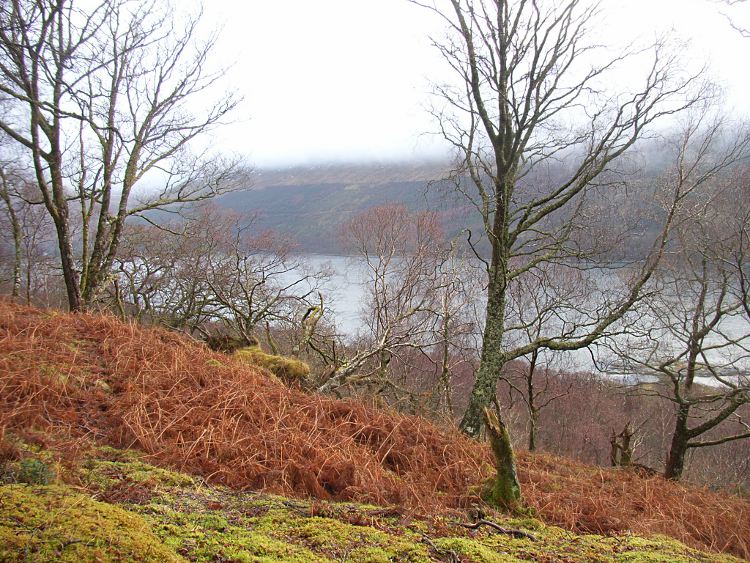
View across Loch Creran from a clearing in the wood Thanks to all who took part. Next field trip is on Sat 14 Feb at North Shian, details to be announced.
|