|


| 14 February 2015 LNHG North Shian field trip
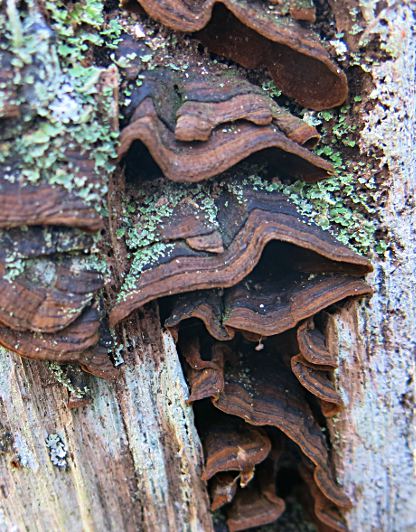
At the car park was an old dead branch covered with Stereum
hirsutum brackets. The branch had obviously been the other way up at one
time, as the brackets had their smooth golden-orange underside
uppermost. New young brackets, with the hairy side on top as
nature intended, had grown out of these, as Sallie's photo shows.
The other common Stereum species is S rugosum, or Pink Curtain Crust.
This does not form brackets but spreads like a flat crust over the wood,
often cracking and turning up slightly at the edge. It is most
frequent on Hazel but can be found on a range of other broadleaved
trees.
The woodland consisted mostly of
birch but with a fair amount of willow, hazel, oak, holly and beech.
All of them were rich in lichens. Cetrelia olivetorum, above,
recognisable by its white flecks, was on Grey Willow.
On the left a nice pic by Jan of the Coral Lichen,
Sphaerophorus globosus. Many lichens and fungi were dried out due
to lack of rain, while others were in damp enough microclimates to have
kept their shape and colour.
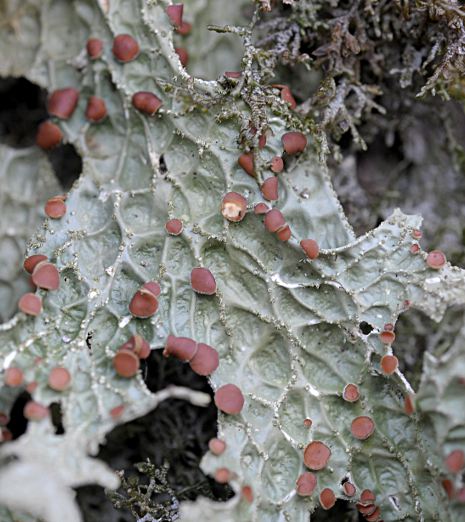
On the right above is our
Species of the month,
Tree Lungwort, looking very pale and dry.
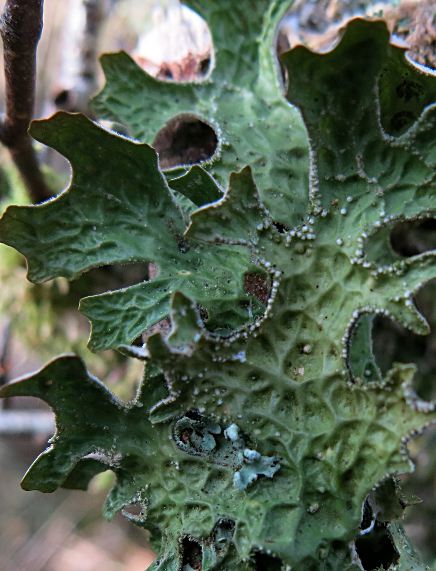
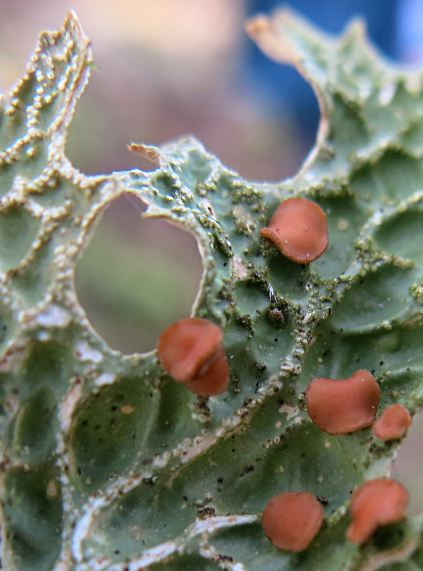
Two more pics of Tree Lungwort by Sallie, both looking
dried out, but with more colour than the first one shown.
Two jelly fungi, one dried out and the other not.
The first is Yellow Brain Fungus, which goes dark orange as it dries.
The second is Birch Jelly Button, on a fallen twig which had kept moist
among the mosses. This fungus is virtually invisible when it dries,
which probably explains why we didn't see any jelly buttons on standing
birch or willow trees.
Cynthia found this hibernating Hawthorn Shieldbug
under old beech bark, where these two Tree Snails were also lurking.
This Common Rough Woodlouse was also under bark, and the
Sea Slater, Britain's largest woodlouse, was soon found by turning over
stones on the shore.
Oak Curtain Crust and Beech Woodwart
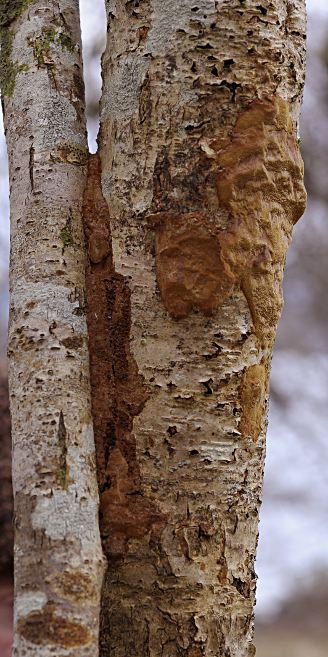
Cinnamon Porecrust, the crust that wants to be a bracket. It consists of vertical tubes which could be neatly arranged if it stuck out from the tree like Birch Polypore or Hoof Fungus, but instead it is splodged vertically onto the tree and produces many small attempts at growing outwards that never get very far. It does have one clever feature though. It glues hazel poles together, just like the common Glue Fungus (Hymenochaete corrugata) does, but whereas H corrugata makes its glue out of special mycelium (the black patches of glue that you commonly see), Cinnamon Porecrust uses its normal fruitbody to do the job, as shown in Jan's pic on the right. This feature is not well documented. I once saw it mentioned on the web but can't find the reference now; it may have been in a forum. I've seen the fungus doing this before so it's not a rare phenomenon. As it gave no spores (the usual problem
with fungi at this time of year), I don't know whether it's Fuscoporia
ferrea or F ferruginea. The ones I've managed to identify in our
area in the past have been F ferrea, so it's probably that, but we can't
record it. The name Cinnamon Porecrust covers both species, it's
fair to say, since they're indistinguishable unless you examine the
spores.
When we got to the shore Cynthia kept talking about "beach balls" which none of the rest of us could see! All was revealed when she explained that beech balls are these round burrs on beech trees. This one has a striking script lichen on it, possibly Opegrapha atra but don't know for sure. The surrounding smooth beech bark is covered with other crustose lichens which look extremely challenging. Think I'll stick to the ones on hazel, they have a bit more definition to them. There weren't many birds about, but we did see Long-tailed Tit, Goldcrest and Woodcock. Thanks to all who took part, and sorry for having such a bad cough that I could hardly speak!
|